February Garden Checklist 2023

February Garden Checklist 2023

February Garden Checklist 2023

February Garden Checklist

  1. Check garden centers for sales on pots, spring bulbs, tools and garden soil – too early for plants
  2. Direct sow radishes, carrots and beets
  3. Start seeds indoors for tomatoes, peppers, herbs – Sow some extra for the SEMG Plant Sale April 30.
  4. Order roses, deciduous fruit trees
  5. Leave any established roses alone – still too early to prune in Sandoval County

Source:  Month-By-Month Gardening:  Arizona, Nevada & New Mexico

December Garden Checklist 2022

December Garden Checklist 2022

December Garden Checklist 2022

December Garden Checklist

Source: Month-by-Month Gardening: Arizona, Nevada, & New Mexico  Jacqueline A. Soule


NOTE FROM MEG:

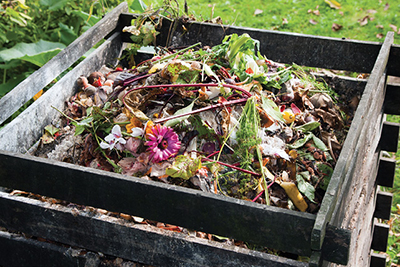
For a beautiful, up close look at what happens in the dark of the compost heap, watch this 22 minute movie (beware, there are some squeamish bits):
https://www.youtube.com/watch?app=desktop&v=uw1LRu51Juc&utm_source=substack&utm_medium=email
Courtesy of Wrought

Butternut Squash – When to Harvest and Prepare

Butternut Squash – When to Harvest and Prepare

Butternut Squash – When to Harvest and Prepare

When should I harvest butternut squash?

Answer from Iowa State University

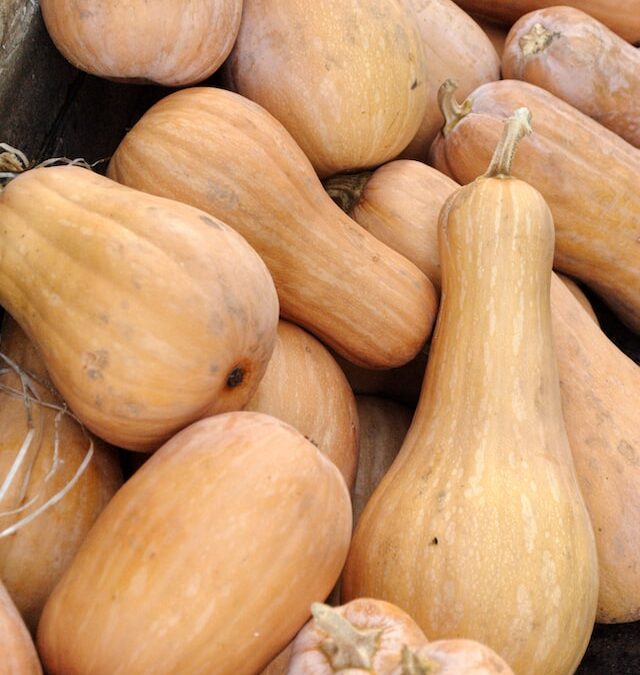
Butternut squash are mature (ready to harvest) when the skin is hard (can’t be punctured with the thumbnail) and uniformly tan in color.  When harvesting, leave a 1-inch stem on each fruit.

After harvesting, cure butternut squash at a temperature of 80 to 85 degrees Fahrenheit and a relative humidity of 80 to 85 percent for 10 to 14 days.  Curing helps to harden the skin and heal any cuts and scratches.

After curing, store butternut squash in a cool, dry, well-ventilated location.  Storage temperatures should be 50 to 55 degrees Fahrenheit.  Do not store squash near apples, pears, or other ripening fruit.  Ripening fruit release ethylene gas which shortens the storage life of squash.

When properly cured and stored, the storage life of butternut squash is approximately 2 to 3 months.

Plant leaves spark with electricity during thunderstorms — and could be altering our air quality in unpredictable ways

Plant leaves spark with electricity during thunderstorms — and could be altering our air quality in unpredictable ways

Plant leaves spark with electricity during thunderstorms — and could be altering our air quality in unpredictable ways

Plant leaves spark with electricity during thunderstorms — and could be altering our air quality in unpredictable ways

By Harry Baker Live Science October 2022

During thunderstorms🌩️, leaves from trees and other plants create mini electric discharges that can significantly alter the surrounding air quality. Researchers are unsure if this is beneficial or harmful.

Electrical discharges given off by the leaves of plants during a thunderstorm can significantly alter the surrounding air quality. When lightning ⚡flashes above, plants on the ground may respond in kind.

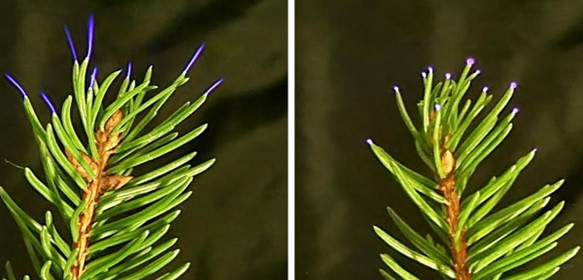
Scientists have long been aware that plants and trees can emit small, visible electric discharges from the tips of their leaves when the plants are trapped beneath the electrical fields generated by thunderstorms high overhead. These discharges, known as coronas, are sometimes visible as faint, blue sparks that glow around charged objects.

Now, new research suggests those plant-based sparks may be altering the surrounding air quality in ways never recognized before. But whether the impacts of these minishocks in the atmosphere are positive or negative remains unclear.

In the study, published Aug. 9 in the Journal of Geophysical Research: Atmospheres, researchers recreated the electrical fields from thunderstorms in a laboratory and analyzed the coronas given off by eight plant species under a range of conditions. The results showed that all of the coronas created a high abundance of radicals — chemicals containing unpaired electrons that are highly reactive with other compounds — which can significantly alter the surrounding air quality.

“While little is known about how widespread these discharges are, we estimate that coronas generated on trees under thunderstorms could have substantial impacts on the surrounding air,” lead study author Jena Jenkins, an atmospheric scientist at Penn State University, said in a statement.

The two radicals given off by the plant coronas are hydroxyl (OH) and hydroperoxyl (HO2), both of which are negatively charged and are known to oxidize, or steal electrons from, a number of different chemical compounds, thereby transforming them into other molecules. The researchers were particularly interested in the concentrations of hydroxyl radicals because they have a greater impact on air quality.

“The hydroxyl radical contributes to the total atmospheric oxidation of many atmospheric pollutants,” study co-author William Brune a meteorologist at Penn State University, said in the statement.

For example, if a hydroxyl radical reacts with greenhouse gases, such as methane, then it can remove the damaging molecules from the atmosphere and help combat climate change, Brune said. But if the same radical reacts with oxygen, it can create ozone, which, despite playing an important role in the upper atmosphere, is toxic to humans. The radicals can also create aerosol particles that harm air quality, he added.

Coronas can be seen discharging at the tips of leaves during the experiments. Photo: Penn State

Coronas can be seen discharging at the tips of leaves during the experiments. Photo: Penn State

This is not the first time that researchers have shown the link between thunderstorms and hydroxyl radicals.

In 2021, a research team led by Brune found that lightning was a major progenitor of hydroxyl radicals in the atmosphere. In their paper, published in the journal Science the team theorized that thunderstorms could be directly responsible for up to one-sixth of the hydroxyl radicals in the atmosphere.

In September, another team led by Brune released a follow-up study, published in the journal Earth, Atmospheric and Planetary Sciences, that showed coronas produced by metallic objects such as telephone poles and transmission towers produce a slightly higher level of hydroxyl radicals than plant coronas. However, the levels of radicals produced by plant and artificial coronas are both significantly less than those produced directly from lightning.

“Even though the charge generated by the [plant] corona was weaker than the sparks and lightning we looked at before, we still saw extreme amounts of this hydroxy radical being made,” Jenkins said.

Researchers want to continue studying these coronas in greater detail to fully understand the effect they have on localized air quality and on a wider global scale.

“The hydroxyl radical is the atmosphere’s most important cleanser,” Jenkins said. “So having a better accounting of where this stuff is being made can give us a more complete understanding of what’s happening.

Other studies suggest that thunderstorms may become more frequent and powerful due to the effects of human-caused climate change, so understanding the effects of thunderstorms on air quality is vital, she added.

During the experiments, the team made another discovery that could help accelerate this field of research: The leafy discharges gave off sharp spikes of ultraviolet radiation. This could allow the team to indirectly study where coronas are occurring in the field and measure their effects on nearby air quality

Adapting your Garden to a Changing Climate

Adapting your Garden to a Changing Climate

Adapting your Garden to a Changing Climate

Adapting your Garden to a Changing Climate

-Sam Thompson – Sandoval Extension Master Gardener

The Southwestern United States is the hottest and driest area in the country.  Climate change is making the area hotter and drier.

Managing a precious resource:  Water 💧

Water is a finite resource that each New Mexican is dependent upon, so each of us should use it wisely. Native plants are most adapted to our hot and dry conditions and provide beauty while being water wise and attractive to pollinators. Selecting plants that are adapted to hot and dry conditions are the best choice for your garden.

Carefully select your watering technique to minimize evaporation. 505outside.com offers valuable information on selecting irrigation for your garden as well as advice on the amount of water for various plants by season. Water early in the day to avoid watering in the heat of the day. Use mulch to help retain moisture. Check your watering system weekly and keep it in good repair to avoid waste.

Take advantage of the rain we receive. Design landscapes to channel rainwater to specific planted areas where more moisture is needed. Plant to control erosion and water runoff. Cisterns and rain barrels can be positioned to capture rainwater from roof areas to be stored and used as needed.

Put carbon to good use

Carbon is a normal part of healthy soil. Keeping the carbon in the soil helps plants and the environment. Minimize tillage of the soil.  When you remove plants from the soil, cut them off at ground level and allow the roots to decompose and add to the soil’s organic material. Keep your soil covered year-round, either with plants or cover crops or other types of mulch. Covered soil helps retain moisture and prevent erosion.

Plant for Diversity 🥕🌼🌱🌹🌿🌻☘️🌷🌵🍅

Plant variety in a changing climate

Plant variety in a changing climate

Some plants will adapt better than others to our changing climate. In your vegetable garden think about companion planting and pollinator attraction. Some plants can provide added protection for your vegetable plants while providing food for pollinators. Planting a variety of your favorite cultivars will give you a better chance for a successful garden than monoculture planting. Keep track of the plants that do well and those that do not. If you have a plant that does well and is an open pollinator (NOT a hybrid) save the seeds and share them with others. Our gardens need to be filled with locally adapted plants that can thrive in our arid climate.

One goal of the home gardener in this changing climate is to create a large variety of locally adapted plants. A diverse gene pool of locally adapted plants will be better suited to surviving the changes we confront in the future.

Location, Location, Location 🧭

Where you put a plant is important. Deciduous trees planted on west, east and southwest sides of buildings will block sun during the hot summer and allow the sun to warm the building in winter. Evergreens will block the wind and can provide protection for plants easily damaged by high winds.

Evergreens can also provide welcome shade during the hot days of summer. While plant descriptions may say a plant needs full sun, that description does not necessarily refer to high elevation and the punishing UVs we experience in summer. Most plants welcome a bit of shade. Vegetable gardens in particular welcome some shade whether from trees, overhead shade cloth or elevated solar panels.

Notice Changes

Changing Climate New Threats

Changing Climate, New Threats

Adapting to change requires that you recognize what is changing. As our winters warm, we may find our first frost is later and our last frost is earlier. This will lengthen the growing season. But to know if these changes are happening requires that you keep track to help with your planning for next season’s garden. Planting earlier can allow plants to become more established before the intense heat of summer.

Don’t forget about the unexpected severe low temperatures and frosts ❄️ that may suddenly visit us in the fall or spring. While your growing season may be lengthening, you should be prepared to protect your plants from the occasional extreme lows.

Some climate changes can bring with it new pressures from insects, diseases, or invasive plants. Local extension agents are likely to be a reliable source of information about new threats we face.

Get Help from Nature 🦋

Creating a pollinator-friendly 🐝 space can help in many ways. Most insects are beneficials 🐞 and very few are truly pests. Inviting beneficials into your garden will pollinate  your plants and many of them will feast on the few pests that may be trying to attack your plants. The key to a successful pollinator garden is having a diversity of plant offerings that offer attractive blooms from spring through fall. This is especially important as some plants may be more adapted to the extreme heat of our summers.

Remember your garden is a process rather than an end product.


A Few Resources:

Albuquerque Water Authority.  505outside.com offers information using water wisely. Also, they offer a guide to waterwise landscaping https://www.505outside.com/wp-content/uploads/2022/10/Final_ABCWUA-Irrigation-Guide_REDUCED.pdf

Bernalillo County Master Composters. This organization offers free classes to help home gardeners learn to set up backyard composting systems.  https://www.nmcomposters.org/classes

Growing the Southwest Garden by Judith Phillips (2015).

Low Impact Development in the Middle Rio Grande Watershed. This coalition offers valuable resources including workshops on water conservation.  https://aridlidcoalition.org/

Rainwater Harvesting information is available from the Office of the New Mexico State Engineer https://www.ose.state.nm.us/WUC/PDF/rainwater-harvesting.pdf

What you can do about climate change: Advice to Gardeners from a Climate Change Expert.  David Wolfe, Cornell professor of horticulture.  https://cals.cornell.edu/david-w-wolfe

Xerces Society.  The organization offers numerous resources about beneficial insects and tips on attracting them to your garden.  https://xerces.org/

You Might Be a Gardener If …

You Might Be a Gardener If …

You Might Be a Gardener If …

Plant iconYou Might Be A Gardener If…


  • You’ve been known to use pretty much anything as a planter – a leaky birdbath, a hollowed out rock…
  • You’ve given sections of your yard their own names (as if you are running your own personal arboretum); the Woodland Garden, The Cacti Garden, The Peninsula Gardens.
  • You have more seed packets than actual vegetables in the crisper drawer of the refrigerator
  • You’d rather buy perennials than clothes
  • You believe the best kinds of plants originate in a friend’s garden
  • You obsess about rain predictions and actual rainfall more than your average farmer
  • You’ve learned to give yourself gardening grace. You realize that it’s OK to pull up a plant that you’ve coddled for five years and to move something three time before you find the right spot
  • You have some sort of compost operation set up in your yard. (Even if you haven’t yet figured out how to produce actual compost.)
  • You know the difference between mulch and compost and how best to use each and know where to buy the best local ones
  • “Help with digging” is one of your love languages
  • The way you work your flower beds or vegetable garden reminds you of the children’s book, If You Give A Mouse A Cookie
  • You save and swap seeds with neighbors and friends
  • You fantasize about seeing friendly critters in the garden
    Garden Critter

    Garden Critter

With thanks to Lois Flowers and others