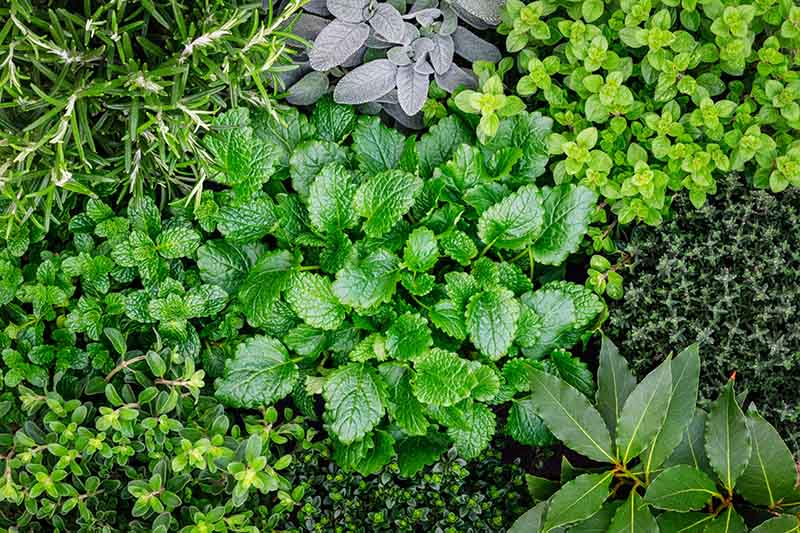
Easiest Herbs to Grow

Easiest Herbs to Grow

Easiest Herbs to Grow

Many of us have learned or remembered how to prepare home cooked meals, courtesy of the quarantine. Part of our culinary enjoyment is adding herbs to enhance the dishes. Many herbs are easy to grow both inside and outside. Herbs come as annuals and perennials Here are ten of the easiest herbs to grow at home.

  1. BASIL – One of the fastest growing annual herbs. The average plant yields ½ cup of leaves a week. It needs 6-8 hours of sun a day. This herb does well with lots of trimming through the growing season. It is superb to season caprese salads and is a main component in pesto.
  1. THYME – Perennial. Quick growing perennial evergreen that grows well in a hot sunny location and tolerates droughts. It can also withstand cold and will winter over. It’s related to Oregano and mint. Often used as an air freshener and incense.
  1. BAY LEAF – Shrub, best planted with a lot of compost. Grown outside, often by the front door or a window as a natural air freshener. Crushed leaves release a sweet earthy scent that is believed to relieve headaches. Dried leaves have more flavor than fresh leaves.
  1. LEMONGRASS – Perennial grass in Zone 10 -11. In Zones 6-9 it needs to be over wintered inside. Grow in pots to contain spread. West Indian Lemongrass (Cymbopogon citratus) and East Indian Lemongrass (flexuosus) both have a clean citrus flavor and scent. It is not uncommon to accidentally buy Citronella grass (C.nardies or C. winterianis) which have a higher amount of citronella oil in them. These are best used as a natural mosquito repellent.
  1. Photo: Pixaby

    OREGANO – Shrub thrives in hot dry climates and takes little water once established. Likes soil with pH between 6.0 and 8.0. Grows best when trimmed back regularly like Basil. Grow pots inside for quick picking and outside as a hardier varietal for year round enjoyment. The dried flowers have stronger flavor than fresh. Ideal seasoning for Italian and Greek cuisines.
  1. MINT – “Easiest plant to grow.” Perennial. Plant in pots to control spread by underground roots. Ideal for growing in a rocky dry bed. Can even be grown in water on the kitchen windowsill. Peppermint, spearmint, applemint and chocolate mint all have similar growing habits. Use in ice creams, baking, and teas.
  1. SAGE – Perennial evergreen shrub both drought and frost tolerant. Plant in COOL SEASON; early spring or fall. Grow in full sun with well-drained soil. Grow near rosemary, cabbage and carrots. Do not grow near cucumbers. Leaves repel pests and propagate easily. Leaves used to flavor cocktails, pasta and fatty meat dishes. Dried leaves are often bundled and burned in spiritual practices to cleanse the air.
  1. ROSEMARY – Perennial ( in zone 7) evergreen shrub. Grow pot on windowsill and trim leaves often to keep compact. In the garden grow in full sun and well-drained soil. Plant near beans, cabbage, carrots and sage. Takes low water. Aromatic herb used to flavor cocktails, meat and as natural air freshener. One of the biggest markets for rosemary is as a preservative in pet foods. It is thought to boost memory.
  1. CHIVES – Perennial. Plant in pots to control spread. COOL SEASON and cold tolerant. Chives go dormant in the heat. Harvest stems three or four times a year. Flowers are edible. Some cultures keep chives by the front door to ward off evil.
  1. CILANTRO – (Coriander or Mexican Parsley) Annual. This plant offers two herbs in one plant. Cilantro refers to the leaves and

    Photo: Chicago Sun Times

    stems. Coriander is the dried seeds. Low water needs. Grow in pots and keep pots in cool spot inside as heat makes the leaves bitter. Dried leaves lose flavor, and it wilts quickly when cut. Some people think Cilantro tastes “soapy.” They have the gene that detects aldehydes, a natural chemical used in soaps and detergents. It’s used in homemade salsa, flavored oils and with seafood.

For information about many other herbs and Spices for the New Mexico home garden, check out this NMSU brochure.

Southwest Yard & Garden –  Hummingbirds are BACK

Southwest Yard & Garden – Hummingbirds are BACK

Southwest Yard & Garden – Hummingbirds are BACK

This week, in honor of the golden currant (Ribes aureum) shrubs blooming in the Los Lunas bosque and at the City of Albuquerque BioPark Botanical Garden, I’m writing about hummingbirds in the garden. I learned from a local birder (I wish I could remember who it was!) that you know it’s time to put out your hummingbird feeders when the golden currants are in bloom.

Golden currants (Ribes aureum) in bloom in the Los Lunas bosque on April 7, 2019 (left), March 25, 2020 (middle), and April 5, 2021 (right). Photo credits Marisa Thompson.

If you’re curious about creating a hummingbird haven in your yard, the book Hummingbird Plants of the Southwest by local author Marcy Scott is a great place to start. On top of excellent details on 120 hummingbird plants for gardens in our region, Scott profiles the 14 hummingbird species found in the Southwest. She also provides precise information on how to create prime hummingbird habitats. “For beginners especially, penstemons are great starter plants for the hummingbird garden and, given a mostly sunny spot and good drainage, they are easily grown most anywhere in the Southwest.” The trick is selecting a mix of flowering plants so that your garden offers nectar throughout the growing season. Scott includes 21 different penstemon species in her book along with their blooming periods. And while red flowers are famously attractive to hummingbirds, “The quintessential hummingbird flower, in summary, will usually be red, reddish-pink, orange, or yellow (and yes, there exist a number of blue, purple, and even white exceptions to this rule).

Last summer, I counted as many as six hummingbirds at once, buzzing between three feeders in my backyard. Even if you’ve only seen one hummingbird at a time, I’ve got great news for you. As David Allen Sibley writes in his new book What It’s Like to Be a Bird, “A rough rule of thumb for estimating the total number of hummingbirds using your feeder is to count the most birds you see at one time and multiply by ten.” Having multiple flowering plants and feeders around your yard can also help avoid having one dominant bird who chases others away. Sibley adds, “A typical individual visits the feeder about once every thirty minutes, and in between it will be catching insects (which can constitute up to 60 percent of its diet) and visiting flowers.

For hummingbird feeders, I found the following recommendations in a 1999 Southwest Yard & Garden column by my predecessor Dr. Curtis Smith that includes tips from Dr. Jon Boren, then NMSU Extension Wildlife Specialist and current Associate Dean and Director of New Mexico’s Cooperative Extension Service:

  •    To make your own artificial nectar solution, mix 1 cup of plain white sugar (not honey) in 4 cups of water.
  •    Red food coloring is unnecessary and may be unhealthy for the birds.
  •    Red decor on the feeder helps grab hummingbirds’ attention.
  • Clean feeders thoroughly with a solution of 1 tablespoon of white vinegar added to 1 cup of water every 2–3 days when the weather is warm.

Sitting pretty outside my office window. Photo credit M. Thompson.

Dr. Boren also suggested getting feeders with a perch to encourage the birds to feed for longer periods of time. An added bonus of the perch is that these busybodies are way easier to photograph when they’re sitting.

Looking for a great gift for Mother’s Day or Father’s Day this year? How about a hummingbird habitat starter kit that includes a few native flowering plants, a feeder, and a birding book? I hope my parents don’t read this column! (Just kidding, they both help edit it every week!)

Black chinned hummingbird nest on my holiday lights in May 2020. Photo credits M. Thompson

Hummingbird resting on a spent sunflower stem on September 14, 2020. Photo credit M. Thompson.

For more gardening information, visit the NMSU Extension Horticulture page at Desert Blooms (http://desertblooms.nmsu.edu/) and the NMSU Horticulture Publications page at http://aces.nmsu.edu/pubs/_h/.  Find your local Cooperative Extension Office at https://aces.nmsu.edu/county/.

Dr. Marisa Y. Thompson, Ph.D., is the Extension Urban Horticulture Specialist in the Department of Extension Plant Sciences and is based at the New Mexico State University Agricultural Science Center at Los Lunas.

Southwest Yard & Garden –  Diagnosing Trees with Oozing Sap… Again

Southwest Yard & Garden – Diagnosing Trees with Oozing Sap… Again

Southwest Yard & Garden – Diagnosing Trees with Oozing Sap… Again

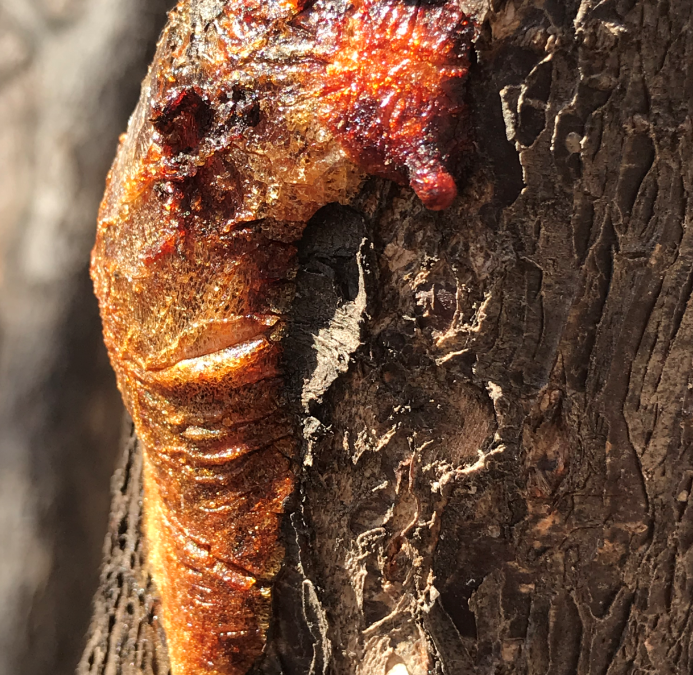
Reddish sap oozing from a plum tree at Bachechi Open Space in Albuquerque, March 2021. Photo credit M. Rehn.

(but this time, the sap is reddish-orange and doesn’t stink!)

Question: Any idea what may be causing the sap to run out of some of these plum trees in the arboretum at Bachechi Open Space?

–          Dustin C., Albuquerque

Answer: This is turning out to be another one of those common questions that come in from all parts of the state. In the past two weeks, I’ve gotten photos of orange or red sap oozing from plum trees and a redbud in the Albuquerque area, an ash in Las Cruces, and I’ve taken a ton of pictures of plum, cherry, and peach trees with similar globs that have hardened after a few years in the sun. Are these weird amber blobs caused by borers or a plant pathogen? Or both? How do you tell? And what can be done about either?

We learned about the peach tree borer back in March 2018:

The greater peach tree borer (Synanthedon exitiosa) is known for causing oozing trunk wounds found at ground level or just below the soil line on stone fruit trees. The sap is often clear, but sawdust frass produced by the borer can be mixed in, giving it a darker color. Stone fruits are named for the pit, or “stone,” that encloses the seed; they include peaches, nectarines, plums, cherries, almonds, and others…

Besides a late freeze, the peach tree borer (also spelled peachtree borer) is the worst threat to stone fruits in New Mexico. Dr. Carol Sutherland, NMSU Extension Entomology Specialist and NMDA Entomologist [recently retired—CONGRATULATIONS!], says peach tree owners need to be aware that “everybody will have peach tree borer sooner or later, and if you do nothing it will kill your tree.”

Plant stress can be an invitation to pests, which are more likely to attack when the immune systems are weak…

Now let’s learn about cytospora canker, a fungal pathogen that is frequently found in New Mexico in woody tissue in poplars, willows, fruit trees, and many others. I reached out for help understanding cytospora vs. borer symptoms.

Phillip Lujan, Diagnostician for NMSU’s Plant Diagnostic Clinic (https://plantclinic.nmsu.edu), pointed out that it’s sometimes hard to distinguish between cytospora canker and borer damage without checking closely for borer holes. And it very well could be a combination of both. Lujan expressed concern that already this season, the NMSU Plant Diagnostic Clinic has received samples and photos of stressed trees. He adds that the prevalence of ooze in late winter and early spring is likely related to the trees starting to emerge from dormancy; as trees bud out and the sap starts moving again, they may be oozing more than at other times of the year.

Cytospora canker sap leaking from the bark of an ash tree in Las Cruces, March 2021. Photo credits P. Lujan.

Last summer, Lujan diagnosed cytospora canker in aspens in Albuquerque and Angel Fire and in cottonwoods in Socorro and Roswell. “This fungus is a relatively weak pathogen, which typically attacks stressed trees. Some symptoms of infection include circular, elongated, or irregular-shaped cankers, which first appear on infected trees as brown, slightly sunken areas in the bark of branches and trunks. As the canker enlarges, the outer bark may become black, brown, gray, reddish-brown, or yellow. The inner bark turns reddish-brown to black. The best management is to prevent infection by keeping trees from becoming stressed. Maintain good watering practices and prune out injured branches as they occur. On infected trees, remove all dead and dying branches. Do not prune trees when the bark is wet. There are no fungicides currently available for controlling cytospora, but again, this is a relatively weak pathogen.”

This bears repeating: As with many insect problems, trees that are already stressed are more likely to have problems with cytospora canker and other pathogens. Trees exhibiting cytospora canker symptoms, like the reddish ooze on tree trunks in these photos, may continue to live and even thrive, providing fruit and shade for many years, as long as the underlying stressors are alleviated. These are most commonly root restrictions (including girdling roots and compacted soils) and drought stress.

Last summer, I missed the chance to write about cytospora ooze and instead focused on slimeflux, a stinkier, but no less prevalent, tree trunk problem. For more on slimeflux, peach tree borers, and links to more amazing cytospora photos and info, visit the blog version of this column. I’ve also linked a fun video that starts with beautiful fruit tree flower buds and ends with me using my thumb to scrape a dried clump of orange sap from the bark of a cherry tree to look for borer hole evidence underneath.

Oozing sap on an aspen tree diagnosed with cytospora canker in Sandia Park, May 2020. Photo credit J. Smith.

For more gardening information, visit the NMSU Extension Horticulture page at Desert Blooms (http://desertblooms.nmsu.edu/) and the NMSU Horticulture Publications page at http://aces.nmsu.edu/pubs/_h/.  Find your local Cooperative Extension Office at https://aces.nmsu.edu/county/.

Dr. Marisa Y. Thompson, Ph.D., is the Extension Urban Horticulture Specialist in the Department of Extension Plant Sciences and is based at the New Mexico State University Agricultural Science Center at Los Lunas.

The Value of Using Native Plants

The Value of Using Native Plants

The Value of Using Native Plants

photo: Pixaby
This commentary excerpt is from Ron Krupp, author of “The Woodchuck’s Guide to Gardening,” “The Woodchuck Returns to Gardening” and his forthcoming book, “The Woodchuck’s Guide to Ornamentals & Landscape Plants.”

Native pollinator plants have long been ignored in our landscapes, but that’s changing. They are, by nature, hardier, better adapted to climate change and provide critical habitat for wildlife. Plus, they have attractive flowers, colorful berries and fall foliage.

Douglas Tallamy’s book Bringing Nature Home describes how nonnative plants have low resource value for our native animals and insects and, as well, displace our valuable native flora. He says that we don’t have enough wild places left to allow nonnative plants to thrive.

The growing demand for native plants in ecological landscaping, including pollinator habitat gardens, has led to the selection and breeding of native cultivars. A native cultivar or “nativar” is a cultivated variety of a native plant that has been selected by humans (in nature or through repeated selections in a breeding program), cross-bred, and/or hybridized by botanists and plant breeders seeking desirable characteristics that can be maintained through propagation.

The flowers of Native Cultivars may vary from the native species in size, shape, abundance, color, and bloom time — all attributes known to influence pollinator visitation. In addition to floral traits, native cultivars are sometimes selected for disease resistance, and more predictable sizes and shapes than their wild relatives, making them more desirable landscape plants. But native cultivars can also be less hardy and may prefer different soil moisture and fertility than the species, and most serious of all, may not be as attractive and useful to pollinators.

The use of Native Species once made this land a rich source of life for its Indigenous peoples and, later, for European colonists and their descendants. That is no longer the case. Today, most of the surviving remnants of the native flora that formed them have been invaded by alien plant species.

The transition from alien ornamentals to native species will require a profound change in our perception of the landscaping value of native ornamentals. Even today, the drive to obtain unique species or cultivars is a primary factor governing how we select plants for our landscapes.

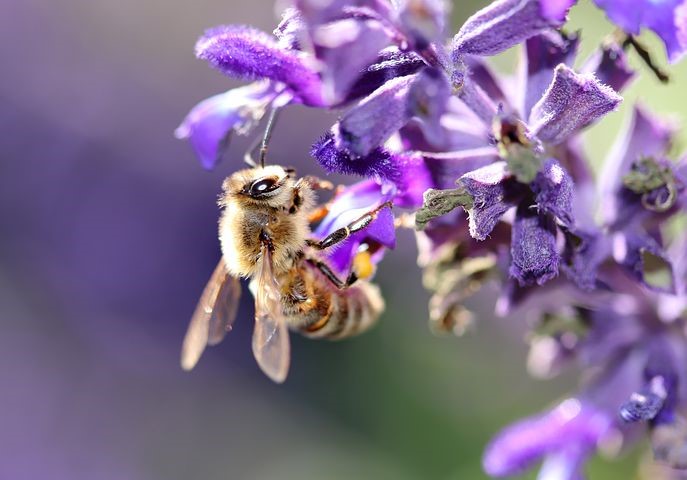
Native plants tend to grow vigorously without requiring much fussing. They generally take climatic extremes in stride. Most are major attractions for butterflies, birds, bees and other pollinators because they provide shelter for these beneficial garden visitors. In my community garden, there are many native bumblebees, but their numbers are diminishing due to pesticides, developments, climate change and the loss of open-pollinated true native species.

As development and subsequent habitat destruction accelerate, there are increasing pressures on wildlife populations. As a gardener, you can increase your love of plants and nature by planting native pollinators.

For the first time in history, gardening has taken on a role that transcends the needs of the gardener. They now have become important players in the management of our nation’s wildlife and can make a difference in the future of biodiversity by growing native species plants.

photo: Pixaby

The flowers from the butterfly bush attract hummingbirds because of its high nectar count. Additionally, they are drawn to the long, brightly colored spikes resembling lilacs. Milkweed, an old-fashioned perennial, attracts pollinators like Monarch butterflies, also known as the “milkweed butterfly.”

These perennials invite butterflies and other beneficial pollinators to your garden. They not only look beautiful in the garden, but they also produce nectar-rich blossoms that help sustain winged creatures and produce flowers at different times during the season. In addition to enjoying the colorful blossoms, you’ll experience the satisfaction that comes with supporting pollinators. So why not grow a pollinator garden? Every little bit helps.

In addition to planting perennials to feed pollinators, you can add to the feast by incorporating annuals into beds, borders and patio pots. These plants last only a single season, but many are magnets for winged creatures — from the Monarch butterfly favorite Verbena bonariensis to colorful Zinnias and Lantanas to the Nicotianas and annual Salvias that are beloved by hummingbirds. To see full commentary, check out the original article.

Starting a Pollinator Garden

Starting a Pollinator Garden

Starting a Pollinator Garden

photo: K. Shadock

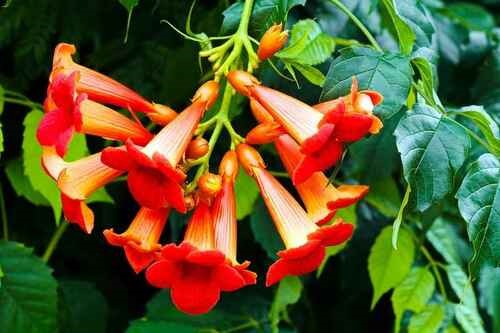
For years I contemplated, rather than acted, on the idea of planting a garden to attract pollinators. That is until the fall I moved to a house with three well established Trumpet Vines (Campsis radicans) and a large Rosemary bush (Salvia rosmarinus). I trimmed them down to a manageable size and decided to observe them for a year before making any decisions about their future in the yard. The following spring saw the Rosemary blossoms covered with bees and the Trumpet Vine was visited by bees, hummingbirds and butterflies through the long flowering season. Seed pods from the Trumpet Vines blossoms provided winter feed for migratory flocks of finches as well.

The success of these two plants fueled my interest. I learned the importance of providing plants that provided food for both larvae and mature insects and plants that provide shelter. Providing plants for spring, summer and fall feeding as well as a range of colors from purple and pink to orange, yellow and white is also important.

Each year I add a few more annuals and perennials to the garden. I may never have a “cottage garden” in this climate. Still, I am creating a garden that serves the pollinators and delights me. Adding a dish of fresh water, in the shade, for my dogs also pleases
the pollinator insects, hummingbirds  and the local Road Runners.

ANNUALS to attract pollinators:  Pansies, Sunflower (Helianthus sp), Coreopsis, Floss Flower (Ageratum) Cosmos ‘Sensation’, Milkweed (Asclepias scaposa), Pincushion Plant (Scabiosa), Zinnia, Mexican Sunflower (tithonia), Egyptian Star Flower (Pentas), verbena lantana, and penstamon.

HERBS to attract pollinators:  Basil (Ocimum sp). borage (Borago officinalis, oregano (Origanum sp), thyme (Thymus sp), lemon verbena (Aloysia citriodora), lavender (lavandula), parsley (Petroselium crispum), fennel (Foeniculum vulgare), and some mints (Mentha sp).

photo: Pixaby

PERENNIALS to attract pollinators:  Indian Paintbrush, Bee Balm (Monarda), Hollyhocks (Alcea rosea sp) Butterfly weed (Asclepias tuberosa), phlox, Lupine, Allium, and Hyssop (Hyssopus officialis) Mexican Bird of Paradise (Caesalpina gilliesii), Columbine(Aquilegia), Rocky Mountain penstemon.

NMSU has several articles about their own efforts to create pollinator gardens as well as research on the best plants to attract Pollinators. Check them out by clicking on this LINK.


How to Clean & Sharpen Your Handheld Pruners

How to Clean & Sharpen Your Handheld Pruners

How to Clean & Sharpen Your Handheld Pruners

Extension.unh.edu

Editor’s Note:  Rather than rewrite, I am simply sharing the 2018 blog and the link to the very helpful video.

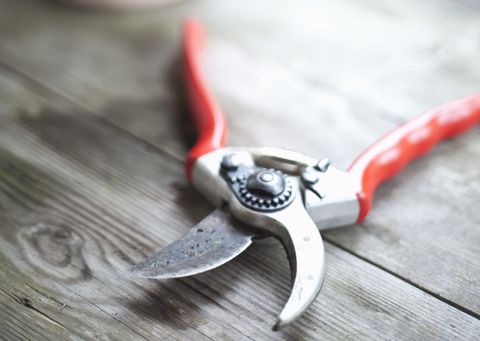
When it comes to pruning, there is nothing better than having a well maintained pair of pruners with a nice sharp blade. Quality pruners should last for years, and replacement parts are available for many brands. It is far easier to prune with sharp tools and it is well worth taking the time to clean and sharpen them. Not only will having sharp pruners reward you with easier cuts, but those cuts will heal better. Dull pruning tools are likely to crush or tear plant tissue, increasing the likelihood of infection from disease organisms. In the video below, Emma Erler, Education Center Coordinator, will show you step by step how to clean and sharpen your pruners.

Supplies

Photo: extension.unh.edu

  • Steel wool
  • Wrench or multi-purpose tool
  • Multi-purpose diamond file(s)
  • General purpose oil (3-IN-ONE oil or mineral oil)
  • WD-40 for rust removal
  • Clean rag

Step by Step Directions

  1. If your pruners are easy to disassemble, start there. It is much easier to clean and sharpen a detached blade. Take pictures as you take apart your pruners to help you remember how to put them back together. Skip this step if your pruners do not come apart readily.
  2. Next, remove dirt and grime with warm, soapy water and a scrubby sponge.
  3. After wiping pruners dry, use coarse steel wool to work off any rust. If pruners are badly rusted apply WD-40 and let soak for 10 minutes. After soaking, remove oil with a clean cloth and use steel wool to get rid of remaining rust.
  4. Use a diamond file to sharpen the blade. Draw the file along the cutting edge of the blade, applying medium pressure. Be sure to set the file at the same angle as the factory beveled edge of the blade. Only sharpen in one direction starting at the inside of the blade and working outward.
  5. Once you’re satisfied the pruners are sharp, run a file with fine grit over the backside of the blade to remove any burrs.
  6. Reassemble your pruners, referring to the pictures you took earlier.
  7. Try cutting a piece of paper with the sharpened blade. If it makes a clean cut, the blade is adequately sharp.
  8. Finish by oiling your pruners to lubricate the moving parts and prevent the steel from rusting. Wipe off excess oil with a clean rag.
  9. Store your pruners in a clean and dry location.​

Video to watch these steps: https://extension.unh.edu/blog/how-clean-and-sharpen-your-pruners