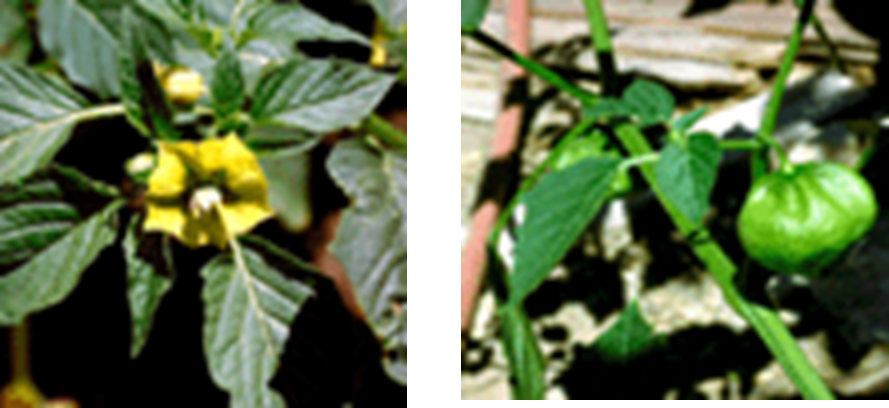
Southwest Plant of the Month – Tomatillo (Husk Tomatoes) – Physalis ixocarpa

Southwest Plant of the Month – Tomatillo (Husk Tomatoes) – Physalis ixocarpa

Southwest Plant of the Month – Tomatillo (Husk Tomatoes) – Physalis ixocarpa

General Information

Plant Form Flower Plant Size 3′ x 3′
Plant Type Annual Water Usage Medium
Sunlight Sun Flowers Yellow

Physical Description: Curious, small, green to purplish tomato-like fruit completely enclosed in a thin, papery, light-green husk that dries tan. Fruit is found summer into fall on long, sprawling stems with dark green foliage and yellow petaled blossoms.
Care and Maintenance: Hornworms. Root rot if over watered and mildew if sprinkled
Gardener’s Notes: There are several native Physalis species but this one produces tasty, edible fruit that makes great Salsa Verde and other dishes. Grow from seed. A heat loving relative of the common tomato, tomatillo will set fruit long after it becomes too hot for tomatoes. Tomato, Lycopersicon esculentum, does fairly well in El Paso if given frequent regular irrigation, Some good heat resistant tomato varieties for El Paso include “Better Boy”, “Ace”.

Plant information from: Southwest Yard & Garden Plant Advisor

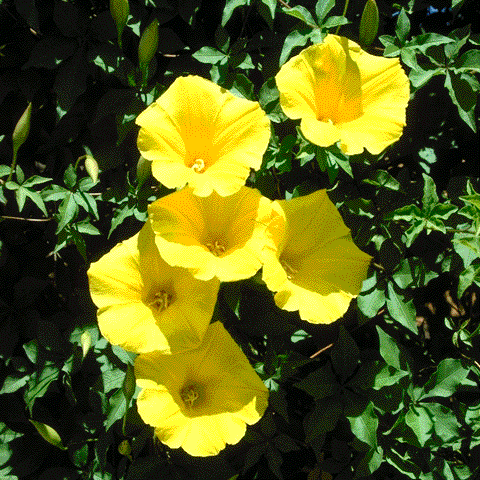
Southwest Plant of the Month – Yellow Morning Glory Vine (Merrima aurea)

Southwest Plant of the Month – Yellow Morning Glory Vine (Merrima aurea)

Southwest Plant of the Month – Yellow Morning Glory Vine (Merrima aurea)

General Information

Plant Form Vine Plant Size 20′ x 7′
Plant Type Perennial Water Usage Medium
Sunlight Sun Flowers Yellow

Physical Description: Fast growing twinning vine with large 3” trumpet-shaped yellow flowers throughout the summer. Evergreen foliage until frost.

Care and Maintenance: Freezes to the ground but recovers quickly in spring from tuberous root. Needs well-draining soil.

Gardener’s Notes: Heat loving native of Baja California, Mexico. Prefers some winter protection. Fabulous color accent for trellis or patio shade.

Plant information from Southwest Yard & Garden Plant Advisor

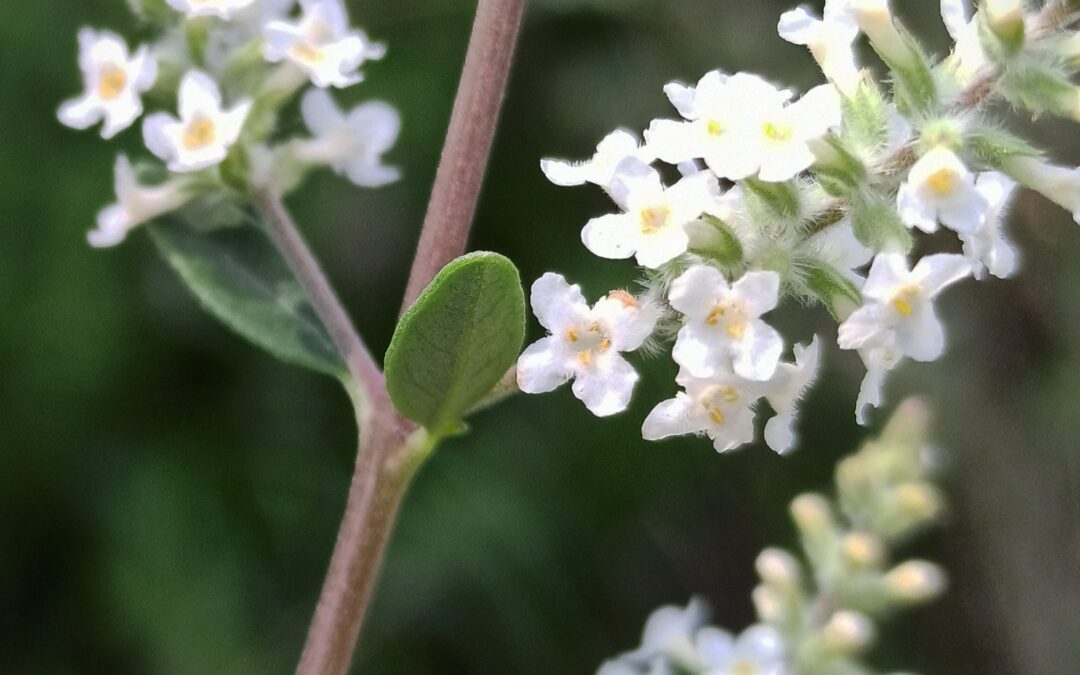
Southwest Plant of the Month – White Beebrush – Aloysia gratissima (Lippia gratissima)

Southwest Plant of the Month – White Beebrush – Aloysia gratissima (Lippia gratissima)

Southwest Plant of the Month – White Beebrush – Aloysia gratissima (Lippia gratissima)

General Information

Plant Form Shrub Plant Size 8′ x 5′
Plant Type Deciduous Water Usage Low
Sunlight Sun, Partial Shade Flowers White

Physical Description:  Small white flowers clustered in 3″ spikes impart a very fragrant vanilla-like aroma, spring and fall and attracts bees.

Care and Maintenance:  Sparse, twiggy appearance without supplemental moisture. Occasional severe cut back will stimulate new growth and flowering.

Gardener’s Notes:  Slender, intricately branched shrub with small elliptical leaves providing light shade. Native to Chihuahuan desert. Near relative in El Paso, A. wrightii or Oreganillo, is more compact (to 4′) and has small oval, aromatic leaves used for herbal purposes

Plant information from Southwest Yard & Garden Plant Advisor.

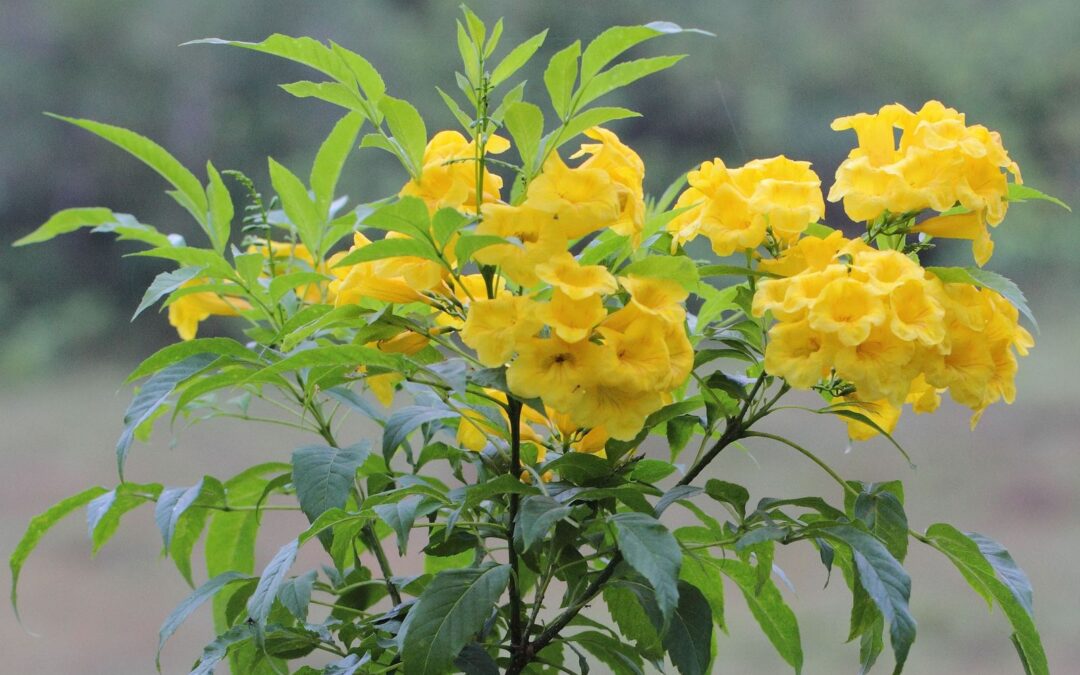
Southwest Plant of the Month – Yellow Bells – Tecoma stans

Southwest Plant of the Month – Yellow Bells – Tecoma stans

Southwest Plant of the Month – Yellow Bells – Tecoma stans

General Information

Plant Form Shrub Plant Size 6′ x 4′
Plant Type Deciduous Water Usage Low
Sunlight Sun, Partial Shade Flowers Yellow

Physical Description:  Clear yellow, 2″ trumpet-shaped flowers cluster at tips of upright woody branches with glossy green foliage. Blooms intermittently, spring to fall.

Care and Maintenance:  Freezes to the ground in winter requiring removal of dead branches in early spring. Recovers quickly. Must have periodic irrigation to maintain blooming and good foliage display.

Gardener’s Notes:  A heat loving, drought tolerant, eye-catching, flowering shrub that is native to El Paso. One of our most outstanding landscape plants. An orange flowered, lush foliage variety or possible hybrid cultivar is available as “Orange Jubilee”

Plant information from Southwest Yard & Garden Plant Advisor.

Southwest Plant of the Month – Maximilian Sunflower – Helianthus maximiliani

Southwest Plant of the Month – Maximilian Sunflower – Helianthus maximiliani

Southwest Plant of the Month – Maximilian Sunflower – Helianthus maximiliani

General Information

Plant Form Flower Plant Size 6′ x 3′
Plant Type Perennial Water Usage Low
Sunlight Sun Flowers Yellow

Physical Description:  Lush, dark green foliage on tall erect stems, the top third of which are lined with stunning yellow blossoms in fall. Plant form large clumps from dense networks of fleshy rhizominous roots.

Care and Maintenance:  Needs room. Rhizomatous spreader controlled by withholding moisture. Spent stalks must be removed in late winter after birds have harvested seeds. Drought resistant but requires supplemental water to perform well.

Gardener’s Notes:  Fast growing, long lived, beautifully flowering plant. Dried seed heads provide important winter food source for wildlife. Root clumps can be divided in early spring. Native to Pecos and Rio Grande valleys of New Mexico and Texas.

Plant information from Southwest Yard & Garden Plant Advisor.

Southwest Plant of the Month – Orange zexmenia – Wedelia texana (Zexmenia hispida)

Southwest Plant of the Month – Orange zexmenia – Wedelia texana (Zexmenia hispida)

Southwest Plant of the Month – Orange zexmenia – Wedelia texana (Zexmenia hispida)

General Information

Plant Form Flower Plant Size 3′ x 2′
Plant Type Perennial Water Usage Low
Sunlight Sun, Partial Shade Flowers Yellow

Physical Description:  Sub-shrub with coarse foliage forming rounded mound of long-stemmed, yellow sun flower-like blossoms. Blooms steadily from late spring to fall.

Care and Maintenance:  Dies to ground with hard freeze. Sprawls in shade. Deadhead to maintain blooming.

Gardener’s Notes:  Long lived, well behaved Chihuahuan native. Cultivar “Devils River” is commercially available. A hardier, tougher Chihuahuan relative, Jefea brevifolia (Zexmenia brevifolia) or Short-horn Zexmenia, has similar flowers on short stems and makes a low, rather tidy mound of small ovate leaves with a rough sandpaper texture but is not commercially available. The genus name Zexmenia was once misapplied to these plants in error but lingers as a common name.

Plant information from Southwest Yard & Garden Plant Advisor.