Michelle Wittie: Food Preservation for the Home Gardener

Michelle Wittie: Food Preservation for the Home Gardener

Michelle Wittie: Food Preservation for the Home Gardener

On Sept. 23 I attended our Gardening with the Masters class on Food Preservation with Madeline Gurney, County Program Director.

I’ve been pressure canning for a long time and even I learned new stuff in the class tonight! I also learned that a new Master Preserving Program will be starting soon. Applications should be opening up in the next week. They’ll talk about ALL preserving methods, you’ll get lots of practice with different equipment and some free educational books and materials will come with the classes.

I’ll definitely be taking the course — MASTER Preserver I’ll be 😁😁 can’t wait!!! Anyone else interested in taking it with me?
Pictured are jars of my pineapple prickly pear jam (not for sale just yet). Isn’t it pretty 🤗

About Michelle Wittie

Michelle Wittie, SEMG 2020, has lived in NM since she was 7. Her Abuelita grew chile in Lemitar, NM. Michelle was a self-taught gardener for more than 20 years before becoming a Master Gardener in 2020. She has more than 500 houseplants with one of her special interests being tradescantia.   She loves growing farm herbs and a large tomato garden, and is equally passionate about rescuing honey bees and box turtles. “Food Should be Free” is her mission.

Michelle is also the founder and moderator of Gardening in Rio Rancho, a community gardening collaboration group with 5000+ members on Facebook (not officially affiliated with SEMG).

Michelle presents several free classes, yearly, offered at the local libraries in Sandoval County through “Gardening with the Masters” – please come check them out.

Garden2Table – Can I Freeze Squash?

Garden2Table – Can I Freeze Squash?

Garden2Table – Can I Freeze Squash?

Can I Freeze Squash?

From:  Kellogg Garden July 2022 Blog

Bring a hint of summertime into your meals throughout the entire year by freezing squash and preserving at its peak of freshness. No matter what kind of squash you harvest or buy at your local Grower’s Market, there is a way to retain its freshly picked essence. When harvest time comes around and you have so much squash you don’t know what to do with it, you’ve shared with all your neighbors, and exhausted all your creative ways of cooking your crop – freezing squash can be a lifesaver. Freezing squash will preserve it in ready to eat form so that it is available for all your favorite meals throughout the entire year.

How to Freeze Squash

Freezing squash successfully varies with the type of squash you aim to preserve. No matter what kind of squash you plan to freeze this guide will help you find the best method to preserve it so its best when you take it out of the freezer.

  • Winter squashes can withstand cubing and flash freeze alone
  • Freezing spaghetti squash requires more cooking and prep before storing
  • Summer squash and zucchini rely on blanching and flash freezing for maximum preservation
Butternut squash

Butternut squash photo by Pexels.com

Winter squashes, like butternut squash can be stored in a cool dry place for a couple of months, freezing butternut squash can extend the viability of this vitamin rich garden favorite. Once properly stored, butternut squash can be thawed and roasted, or tossed into soups and stews without much fuss

The optimal way to freeze butternut, or any other winter squash is to peel the squash, remove all the seeds and cut it into 1 inch cubes. Spead the cubes in single layer on a parchment lined baking sheet and place them in the freezer for one hour. When thoroughly frozen, transfer the squash to a freezer bag

Can I Freeze Spaghetti Squash?

Freezing a spaghetti variety requires more preparation than other squashes. Spaghetti squash is known for its pasta-esque strands of delicious goodness that are low in calories while rich in vitamin A, beta carotene, potassium and folic acid. Properly preserved spaghetti squash makes a fantastic instant meal option that will give that summer taste that is even more delicious on a cold winter day.

Here’s how to get the most out of your spaghetti squash when freezing it

  • Preheat the oven to 375 degrees
  • Slice the squash in half from end to end and remove all the seeds
  • Place the squash halves on a baking sheet – skin side down
  • Bake 30 to 335 minutes until squash is fork tender
  • Take squash out of the oven and allow it to cool
  • Run a fork along the length of the squash to loosen the spaghetti like strands of flesh
  • Place the strands in a strainer atop a large bowl to remove the drainage
  • Cover and store strainer of squash and draining bowl in the refrigerator for 12 hours
  • Discard the liquid that has been drained from the squash
  • Pack the drained squash strands into freezer bags, removing any excess air from the bag, and store in freezer for up to one year

Freezing Summer Squash

Successfully freezing summer squash requires a little bit of knowledge and a few simple steps. If you only slice up or cube summer squash and flash freeze it, you will likely end up with a mushy and disappointing unveiling when you defrost it—blanching squash before flash freezing squash makes all of the difference for preserving the texture of your squash.

Summer Squash Varieties

Patty Pan Squash

Patty Pan Squash from Pexels.com

Chayote, Cousa, Pattypan, Yellow Crookneck. Yellow Straight-neck, Zephyr and Zucchini

To freeze these delicate fruits:

  • Select freshly picked summer squash for freezing. Inspect the squash and choose squash that is firm and supple with no blemishes.
  • Wash squash well in cool water, eliminating dust or pests.
  • Use a sharp knife to trim off the ends of the squash.
  • Slice or dice squash into uniform slices or cubes.
  • Place raw slices or cubes into a pan of unsalted boiling water for one minute – bring back to boil.
  • Use a slotted spoon to carefully remove the squash from the boiling water and transfer it immediately to an ice water bath. That will stop the cooking.
  • Squash contains a lot of moisture, so it is essential to drain the squash. Lay blanched squash out on a clean kitchen towel. Let drain on counter 8 hours or overnight. Replace towel as needed.
  • To keep the squash from sticking together in one mass when it is frozen, flash freezing is necessary. To flash freeze, lay out parchment paper on a baking sheet and spread the slices or cubes of blanched and drained squash in a thin layer. Place the tray in the freezer for one hour.
  • Once the squash is frozen, move it to freezer bags or containers and store in freezer for up to one year.

Best Types of Squash for Freezing

Chayote Squash

Chayote Squash by Pexels.com

These prolific squash varieties will give you plenty of delectable fruits for use right away and will freeze incredibly well for later use.

  • ‘Summer Squash Goldetti‘– deep golden skins and substantial sweet fleshy fruits on a bush-like plant.
  • ‘Black Beauty’ – produces plentiful deep green zucchini on upright bush-like plant.
  • ‘Fordhook Zucchini’ upright, open habit plants which grow prolific green fruits.
  • ‘Cocozelle’ – Italina heirloom striped. Light green fruits with ribbed texture
  • ‘Green Tiger’ – Stunning light and dark green striped fruits.
  • ‘Waltham’ – High performing butternut squash variety with sweet orange flesh and cream-colored skins.

Domestication History of Squash Plant (Cucurbita spp)

Squash blossom

Squash blossom by Pexels.com

Squash (genus Cucurbita), including squashes, pumpkins, and gourds, is one of the earliest and most important of plants domesticated in the Americas, along with maize and common bean. The genus includes 12–14 species, at least six of which were domesticated independently in South America, Mesoamerica, and Eastern North America, long before European contact.

Evidence suggests that cucurbit ecology is tightly bound up with one of its pollinators, several varieties of an American stingless bee known as Peponapi or the gourd bee. Ecologist Tereza Cristina Giannini and colleagues identified a co-occurrence of specific types of cucurbit with specific types of Peponapis in three distinct geographic clusters. Cluster A is in the Mojave, Sonoran and Chihuahuan deserts (including P. pruinosa); Cluster B in the moist forests of the Yucatan peninsula and Cluster C in the Sinaloa dry forests.

Peponapis bees may well be crucial to understanding the spread of domesticated squash in the Americas because bees followed the human movement of cultivated squashes into new territories. Entomologist Margarita Lopez-Uribe and colleagues (2016) studied and identified molecular markers of the bee P. pruinose in bee populations throughout North America. P. pruinosa today prefers the wild host C. foetidissima, but when that is not available, it relies on domesticated host plants, C. pepo, C. moschata and C. maxima, for pollen.

Garden2Table – GARDEN2TABLE June 2022

Garden2Table – GARDEN2TABLE June 2022

Garden2Table – GARDEN2TABLE June 2022

GARDEN2TABLE 2022

By: Cassandra D’Antonio (SEMG 2012)

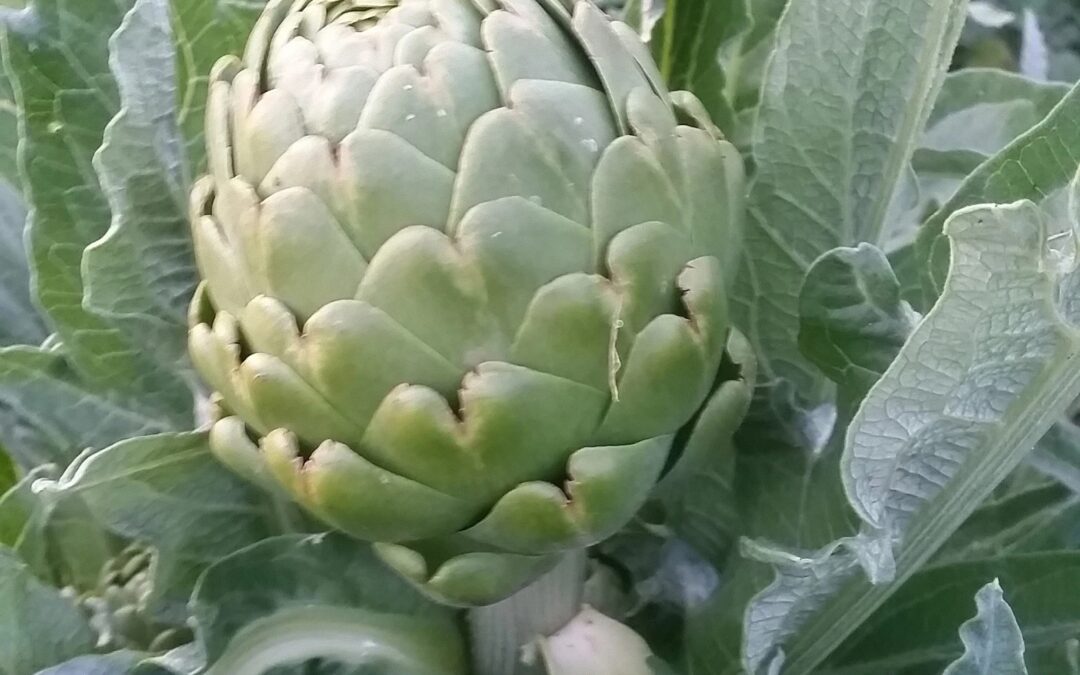
My husband and I had the opportunity to visit Southern Italy and Sicily the first two weeks in May with fellow SEMGs Sam and John Thompson. Our travels started in Rome, moved south to Naples, Sorrento, Capri Island, and Amalfi Coast, and then on to Sicily to explore Palermo, Agrigento, Ragusa Ibla, Syracusa, and Catania. There’s so much that can be written about the many sublime but simple dishes that can be prepared using the freshest produce unique to these regions. Lemons, oranges, pomegranates, almonds, fennel, olives, tomatoes, and pistachios are treasured in both Southern Italy and throughout most of Sicily, while eggplant and zucchini are featured in many Sicilian dishes. And surprising to us, the non-native prickly pear cactus is not only a symbol of the Sicilian landscape but is also cultivated for its fruits. Ubiquitous to all of these regions is the cannoli, but not more than in Sicily, where there are serious cannoli wars, similar to our green chile cheeseburger competitions. But in all seriousness, the most ubiquitous regional produce of all of these regions is the artichoke—the topic of this month’s column.

In Rome it is all about the Artichoke. The Roman artichoke, known as il carciofo Romanesco or just Romanesco artichoke, can be found piled high in crates in market stalls and restaurant windows throughout Rome in late winter through early spring, when they are at their most tender peak. The Roman artichoke is rounder than other types of artichokes, about the size of a baseball. The outer, violet-stained leaves are softer than their cousins, and there is no choke—the inedible, fibrous centers that most other types have. That is why most of the entire Roman artichoke can be prepared and eaten the way they are in two of the most famous Roman artichoke dishes—carciofi alla giudia, or Jewish-style artichokes, and carciofi alla romana, Roman-style artichokes. More on these dishes below.

Life history of the Italian artichoke. Artichokes are one of the oldest foods known to humans. Many historians believe the artichokes originated in the Mediterranean countries, possibly Sicily or Tunisia. In ancient times they were cultivated in Sicily, which is where the modern Italian artichoke seems to have gotten their start. They spread to the rest of Italy during the Arab rule of Sicily in early medieval times. Ancient Greeks and Romans considered artichokes a delicacy and an aphrodisiac. In the 16th century, women were forbidden to eat artichokes because they were thought to enhance sexual power. At some point, the Roman artichoke variety was developed in the coastal area near Rome and became known locally as mammola or cimarolo.

The artichoke is a perennial in the thistle group of the sunflower family. The part that we eat is actually the plant’s flower bud, and if allowed to flower blossoms into a beautiful violet blue color. Baby artichokes are not a separate variety, they are smaller versions of the larger artichokes which are picked from the lower parts of the artichoke plant where the plant fronds protect them from the sun, stunting their growth. They have no fuzzy choke, making them a good substitute for the Romanesco artichoke.

Artichokes are low in fat and rich in fiber, vitamins, minerals, and antioxidants. For more health benefits, please visit Top 8 Health Benefits of Artichokes and Artichoke Extract (healthline.com).

Artichokes in the U.S.A. French immigrants brought the globe artichokes (Cynara scolymus), also known as the “French artichoke,” to the United States in 1806, when they settled in the Louisiana Territory, but by 1940, they mysteriously disappeared. They were later established in the Monterey, California area by the Spaniards during the late 1800s. |
In 1922, Andrew Molera, a landowner in Monterey, decided to lease his land he had dedicated to growing sugar beets to Italian farmers that he encouraged to try to grow the “new” vegetable because at the time artichokes were being shipped to New York at $6/crate and being sold in Boston for 30 to 46 cents/each. (Fun fact: Marilyn Monroe was the first official California Artichoke Queen in 1949.) Currently 100% of all artichokes grown commercially in the United States are grown in California, which supplies nearly 100% of the country’s crop. Artichoke fields are maintained perennially for 5 to 10 years. Each cropping cycle is begun by cutting back the tops of the plants several inches below the soil surface to stimulate growth of new shoots. (For more history of artichokes, you may enjoy the following article, which was used as a source this column: History and Legends of Artichokes, What’s Cooking America.)

Growing artichokes in New Mexico. I know some of you grow artichokes in your home gardens; I’ve seen pictures of your efforts on Facebook and Instagram. We inherited an artichoke plant at our small farm in the North Valley, which only produced a couple of buds a year. I let them mature into their beautiful flowers because they attracted butterflies and hummingbirds. I’m not saying we can’t successfully grow artichokes here, though it’s not easy. Here they can be grown as perennials, while in the colder zones 7-11, they can only be grown as annuals. Locate your plants carefully, because they will grow in that location for 5 to 10 years if you’re lucky. Plant 4 feet apart in an area with full sun to partial shade and nutrient-rich, loamy soil. They need consistent soil moisture throughout the growing season, so water them when the top inch of soil is dry. Retain soil moisture by adding a 4-inch layer of organic mulch. Once buds start to form, remove the mulch, and add a 4-inch layer of compost. Harvest artichoke buds when they’re about 3-inches in diameter and are rightly packed and firm. Good luck!

The Peasants Eat Thistles, so wrote Johann Wolfgang Goethe (1742-1832) in this book Travels Through Italy. Indeed, the artichoke started off as a food favored by peasants throughout the centuries, though they were considered a delicacy by Ancient Greeks and Romans. As mentioned above, two of the most traditional dishes of Roman cuisine are discussed below.

Jewish-style artichokes have their origins in the 16th century when the Roman Jews were ordered to live in a closed ghetto on the banks of the Tiber River in 1555. This area is still known as the Jewish Ghetto, which has a rich culinary history. Once prepped by removing the outer leaves and then trimming the rest in a circular fashion until the artichoke has a rose-like appearance, the outer skin is pared away from the stem. They are then deep-fried in oil for a few minutes, drained and seasoned with salt and pepper. The leaves are then opened up and fried again until the leaves are crispy. These artichokes are eaten whole by starting with the outer leaves, which are said to resemble potato chips until you reach the
center, which is said to have a rich, buttery consistency and flavor. We never reached the center because eating the leaves was to me like eating a handful of over-roasted pumpkin seeds. We much preferred the soft, delicate consistency and flavor of the Roman-style artichokes. Photo:  C. D’Antonio

Roman-style artichokes, our featured recipe this month, are stuffed with a mixture of garlic, parsley, and mint and then slowly braised upside down in water, white wine, and olive oil until they turn into a delicious, soft, and fragrant side dish or appetizer. This was our favorite dish, which we ordered over and over again in Rome. Enjoy!!

Garden2Table – GARDEN2TABLE April 2022

Garden2Table – GARDEN2TABLE April 2022

Garden2Table – GARDEN2TABLE April 2022

GARDEN2TABLE 2022

By: Cassandra D’Antonio (SEMG 2012)

Foraging for Wild, Native Edible Foods

What is Your Gateway to Wild Foods?

That was a question Brad Lancaster asked multiples times at the New Mexico Land & Water Summit in March, and his answers were energetic, innovative, and inspiring. Brad is a dynamic teacher, consultant, and designer of regenerative systems that sustainably enhance local resources and our global potential; the author of the award-winning, best-selling book series Rainwater Harvesting for Drylands and Beyond; and creator of the website www.HarvestingRainwater.com.  He is also the co-founder of Neighborhood Foresters, which strives to repopulate Tucson’s urban core with rain-irrigated, native food forests. 

Through his work with Neighborhood Foresters, Lancaster and his brother’s family harvest about 100,000 gallons of rainwater a year on an eighth-acre urban lot and adjoining right-of-way in downtown Tucson, which is located within the Sonoran Desert and receives just around 11 inches of annual rainfall. This harvested water is then turned into living air conditioners of food-bearing shade trees, abundant gardens, and a thriving landscape incorporating wildlife habitat, beauty, medicinal and edible plants, and more. This work also inspired the Eat Mesquite and More, a cookbook which encourages a renaissance of “wild agriculture,” and “celebrates native food forests of the Sonoran Desert and beyond with over 170 recipes featuring wild, indigenous foods, including mesquite, acorn, barrel cactus, chiltepin, cholla, desert chia, desert herbs and flowers, desert ironwood, hackberry, palo verde, prickly pear, saguaro, wolfberry, and wild greens.” Bake sales are regularly held in downtown Tucson using recipes that highlight indigenous, wild foods.  Eat Mesquite and More: A Cookbook for Sonoran Desert Foods and Living by Desert Harvesters – Rainwater Harvesting for Drylands and Beyond by Brad Lancaster (harvestingrainwater.com)

Wildcrafting in New Mexico

While doing research on native foods and wild agriculture in New Mexico, I came across several articles, blogs, and websites about “wildcrafting,” a term I hadn’t heard of before. According to Wikipedia: Wildcrafting (also known as foraging) is the practice of harvesting plants from their natural, or ‘wild’ habitat, primarily for food or medicinal purposes. It applies to uncultivated plants wherever they may be found and is not necessarily limited to wilderness areas.  And it appears that this traditional fine art is very much alive and well in New Mexico through tours, workshops, groups, and even cooking classes. According to an article in Taos News, spring and early summer are a fine time to go wildcrafting in Northern New Mexico. And to successfully wildcraft, it is important to know where and in which seasons to find certain herbs and edible plants and the sometimes very short windows of time when they should be gathered so they are at their peak. So, let’s explore some of the edible wild plants New Mexico has to offer.

Wild Asparagus: Let’s begin with wild asparagus because it is synonymous with Spring, and it is at its tender best when harvested early.  According to hunter, angler, gardener, and chef blogger Hank Shaw (Hunter Angler Gardener Cook – Hank Shaw’s Wild Food Recipes (honest-food.net), who wrote an entire post on Foraging for Wild Asparagus, wild asparagus is most often found in saline or alkaline soils and soil moisture is important: “Asparagus doesn’t want its feet wet, but wants to be close enough to get the benefit. In the arid West, you will need to focus on marsh edges, irrigation ditches and near cattle ponds or sloughs and streams. “In northern New Mexico, wild asparagus loves growing near some of the Taos Valley acequias, though finding it requires a sharp eye, a bit of walking, and some luck because it can be sometimes hard to spot amid tall grass or brush near the irrigation ditches.

Purslane:  An annual with small succulent leaves and yellow flowers, purslane grows best in hot, sunny, dry places: in the cracks of sidewalks, a weed in your garden, and along gravel roads and sunny trails. When eaten raw, this plant is crunchy and tart, and its young leaves make a great addition to sandwiches and salads. Considered a superfood, it is packed with vitamins and minerals, including vitamins A, C, and E, antioxidants, and omega-3 fatty acids. Depending on growing conditions, purslane can be found and harvested between June and September.

Quelite (aka lamb’s-quarter or wild spinach): Quelite or lamb’s-quarter is considered a weed in North America, but in other parts of the world it’s cultivated as a vegetable. Its foliage is diamond shaped, and the undersides of the leaves are white. Both the leaves and stems are edible, with a mild flavor, similar to spinach. These plants contain a fair amount of vitamins and minerals, including vitamins A and C, and iron, folate, magnesium, and phosphorous. Look for it in June and July, in sunny fields and in your yard and garden. Strip the leaves off the stems and use them as you would spinach. 

Prickly pears:  This cactus is common in both cultivated and wild landscapes in north-central New Mexico, where they grow in hot, dry conditions and in poor, sandy soils. To cook with prickly pears, look for young, large paddles with the fewest spines. Use a knife or vegetable peeler to remove the spines and glochids and then slice up the pads and add them to egg dishes or stir-fries. You can find and harvest the ripened fruits of the prickly pear from August through October. Use prickly pear juice to make jellies, marinades, syrups, cocktails, and sorbet.

There are many more edible (and medicinal) plants growing in the wild here in New Mexico, and in your own yard and gardens, such as chokecherries, sumac, juniper berries, amaranth, mallow, and dandelions, just to name a few. For more information regarding wild, edible plants of New Mexico, check out Charles Kane’s book Wild Edible Plants of New Mexico.  Or Ellen Zachos’ website Backyard Forager (thinkific.com), which is all about how to harvest and cook with wild edible plants and mushrooms and includes an online mini foraging course for beginners.

Spring Vegetables and Recipes

So many of our favorite fruits and vegetables are in season this time of year: leeks, sugar snap peas, radishes, fennel, asparagus, artichokes, strawberries, cherries, mushrooms, and many more. And we have you covered with dozens of spring recipes at the following links:

63 Side Dish Recipes for Your Spring Dinner Table | Epicurious | Epicurious
40 Fast Spring Vegetable Recipes—the Perfect Seasonal Sides (tasteofhome.com)
30 Vibrant Healthy Spring Recipes! | Feasting At Home
25 Best Spring Recipes | Cooking Light

Garden2Table – GARDEN2TABLE March 2022

Garden2Table – GARDEN2TABLE March 2022

Garden2Table – GARDEN2TABLE March 2022

GARDEN2TABLE 2022

By: Cassandra D’Antonio (SEMG 2012)

EAT YOUR WATER, WINTER SALADS & MORE

EAT YOUR WATER. How many of you have recently purchased a head of iceberg lettuce? My husband did a few weeks ago when I asked him to pick up a package of spring mixed greens, claiming the store had been emptied of all spring mix, so he thought iceberg was the next best thing. I can’t remember the last time I bought iceberg lettuce, knowing for years that darker is better where lettuces are concerned—highly nutritious, low in calories, high in vitamins A and K, folate, and manganese, in addition to providing fiber to assist in the natural detoxification process.

Staring at this ball of iceberg lettuce reminded me of my childhood, when my mother served us salad with every meal—chunks of iceberg lettuce, sliced cucumber, and a wedge or two of not always ripe tomato, along with our choice of Italian or Thousand Island dressing. Ugh!

But when I made myself a sandwich using iceberg lettuce, I found that it was surprisingly one of the best sandwiches I had made in a long time. Between two slices of whole grain, seeded bread, I coupled thinly sliced turkey and cheddar cheese with a generous chunk of iceberg lettuce and found heaven. The cold crunch of the lettuce was an absolute delight. It also reminded me of some of the more satisfying salads I have made using colorless chopped cucumber, radishes, and celery left over from a crudité dish. Which made me wonder why the crispest, most water-laden, and sometimes neutral tasing produce are often the most satisfying and refreshing, and whether they have a place in a healthy diet plan.

I found my answer when I Googled “most water-laden vegetables,” and the answer is a definite yes. Because the human body is 55–60% water, it needs a fresh daily supply for proper digestion, to keep organs functioning, joints lubricated, and otherwise stay healthy. Water is essential to your survival by:

  • Regulating your body temperature
  • Moistening your eyes, nose, and mouth tissues 
  • Protecting your organs and tissues
  • Bringing nutrients and oxygen to your cells
  • Lubricating joints
  • Flushing out waste products
  • Dissolving minerals and other nutrients for your body to use.

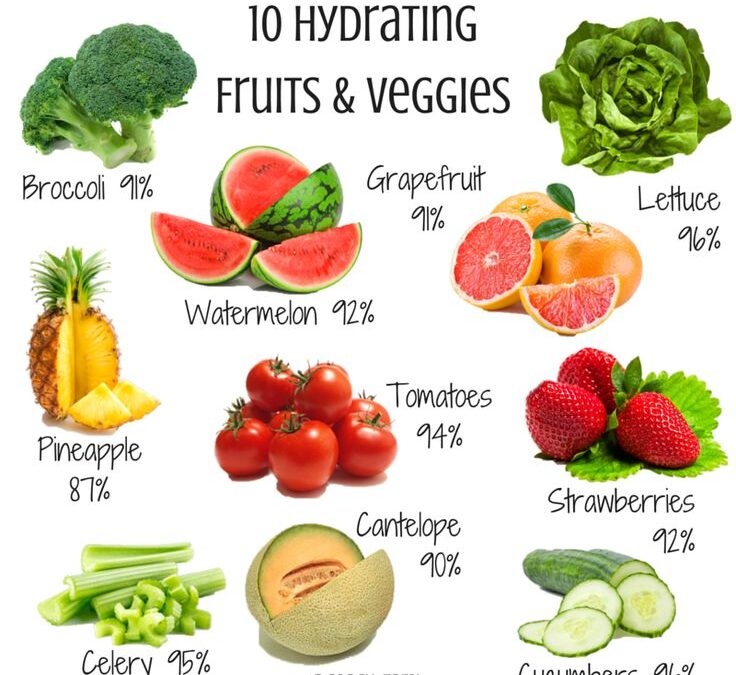
But you don’t have to drink all the water you need; you can just eat some of it. Fruits and vegetables all contain water, and many are mostly water. Below are a dozen fruits and veggies that are at least 90% water, according to HealthlineMedical News Today, and the University of California’s Berkeley Wellness. That means a cup of any of them contains nearly a cup of water. All of them are healthful, delivering fiber and different vital nutrients. (Follow the links for recipes plus selection and storage tips from the U.S. Department of Agriculture.)

Bell peppers: High in vitamin C, plus some potassium, iron, and calcium.
Cabbage: High in vitamin C, good source of calcium, plus some iron.
Cantaloupe: High in vitamins A and C, good source of folate, plus some calcium and iron.
Cauliflower: High in vitamin C, good source of folate, plus some calcium and iron.
Cucumbers: Good source of vitamin C, plus some vitamin A, calcium, iron, magnesium, and vitamin K.
Celery: Good source of vitamins A and C, plus some calcium, iron, and vitamin K.
Iceberg Lettuce: Modest amount of vitamins A and C, plus some calcium, iron, potassium, zinc, and vitamin K (leaf lettuce is also a good source of folate).
Spinach: High in iron, folate, and vitamins A and C, good source of magnesium, plus some calcium, iron potassium, and vitamin K.
Strawberries: High in folate and vitamin C and antioxidants, plus some potassium, iron, and manganese.
Tomatoes: High in vitamins A and C, good source of potassium, plus some iron, folate, vitamin K, and the antioxidant lycopene.
Watermelon: High in vitamins A and C and antioxidants, plus some potassium, zinc, copper, and B vitamins.
Zucchini: High in vitamin C, plus some calcium, iron, manganese, magnesium, and vitamins A and K.
Worth noting: Broccolicarrotsgrapefruitkaleoranges, and peaches aren’t on the list above, but are all above 80% water and good choices, too.

GUIDES TO PLANTING & HARVESTING LETTUCES. Most greens and salad crops, such as lettuce, spinach, Swiss chard, collards, and kale, are cool season crops that should be sown early before temperatures are too warm. This cool-season vegetable germinates best at 65–70°F. Therefore, if you plant them outside too early in the spring they will die. And if you plant them too late, your lettuce won’t produce a harvest before the first frost arrives in the fall. Here are two excellent guides to planting lettuce in New Mexico:

Here is the BEST Time to Plant Lettuce in New Mexico (2022) – The Gardening Dad

NMSU: Home Vegetable Gardening in New Mexico

WINTER SALADS. Though spring is fast approaching, it’s not too late to indulge in a variety of winter salads, which are heavier than a summer salad because they typically include grains, legumes, cruciferous and root veggies, winter squashes, hardy greens, and seasonal citrus fruits. To make this task easier, below are links to dozens of delicious, satisfying winter salad ideas.

Greens Aren’t Just for Summer: 19 Delicious Winter Salad Ideas | Food & Wine (foodandwine.com)
25 Winter Salad Ideas – Best Recipes for Winter Salads (delish.com)
37 Best Winter Salad Recipes We Can’t Stop Making | Bon Appétit (bonappetit.com)
26 Best Winter Salad Recipes – Insanely Good (insanelygoodrecipes.com)

ROASTED CAULIFLOWER SALAD WITH CREAMY HONEY MUSTARD VINAIGRETTE is our featured recipe for March. I selected it because who can resist roasted cauliflower and chickpeas tossed in smoky chipotle and paprika, served alongside avocado and topped with a creamy mustard vinaigrette? 

Garden2Table – GARDEN2TABLE February 2022

Garden2Table – GARDEN2TABLE February 2022

Garden2Table – GARDEN2TABLE February 2022

GARDEN2TABLE 2022

By: Cassandra D’Antonio (SEMG 2012)

All About Rutabagas

When was the last time you purchased a rutabaga? For me, it was last week after running across more than one food blog or article extolling this inexpensive, flavorful, low calorie, and easy to prepare winter vegetable, making me wonder if the rutabaga is the “new” kelp, Swiss chard, daikon radish, water cress, broccoli leaves, collard greens, celery root, dandelions, all of which were purportedly trending in 2021.

I think we can all agree that the first trendy hipster vegetable was kale, which became fashionable about 10 years ago, when we started blending it into our smoothies, turning it into chips (guilty), and even rocking it on t-shirts (not guilty). However, around 2015, some food writers were declaring kale dead in blogs titled “The Rise and Fall of Kale,” and “What Will Be the Next Hipster Vegetable.” Explaining how kale became the hipster vegetable that drew us all in, Christine Garofalo wrote in 2015 for Paste Magazine that “[a] number of external factors surely contributed to making kale so cool — from marketing execs pushing “Eat More Kale” shirts to the trendy, suspender-wearing chefs at the Lower East Side restaurant Fat Radish who came up with the Kale Caesar — but at the end of the day, I venture to say that all these fancy marketing schemes could not have had the same impact had kale not also packed a lot of nutrition into a small, relatively cheap, package.” Ms. Garofalo goes on to write, “There is no shortage of could-be viral veggies out there,” and proceeded to list six criteria, keeping in mind some of the things that made kale so cool, that could make a vegetable go viral from farm to table: cost, nutritional density, availability, familiarity, cultural cachet, and juicing potential.

Rutabaga: Trending or Underrated? Though rutabaga doesn’t meet a few of Ms. Garofalo’s metrics, according to Erik Mathes, (Fall Food Trend: Rustic Rutabaga Gets Its Modern Moment | Vitamix), the rutabaga was trending with savvy chefs in the fall of 2016. (I have to say I missed it.) Or maybe it’s coming back because it never really took off? What recently brought the rutabaga to my attention was a January WSJ article on British food stylist and writer Anna Jones and her new cookbook “One: Pot, Pan, Planet” (Knopf), published in the U.S. Jan. 4, which offers her new collection of plant-based recipes—all of which can be made using only a pot or two—and serves as a guide to environmentally sustainable eating, shopping, and cooking. In the WSJ interview, Ms. Jones pronounces the rutabaga as the most underrated ingredient, crooning “It’s a really, really useful, really cheap vegetable. I think it should be up there with the squashes of the world. It’s got that savory-sweet balance. It’s great cut into strips for oven chips. I also make a version of a carbonara with it. It goes crispy and craggy—obviously not the same as pancetta, but to me, it works in well. Smoked salt gives it a bit of smoky flavor.” Ms. Jones’ vegan Smoky Rutabaga Carbonara is this month’s Garden2Table featured recipe.

Rutabaga Basics

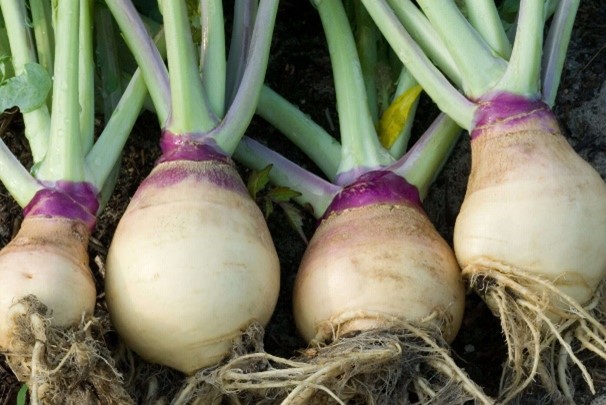
This rustic root vegetable is a staple in Northern European cuisine and known by several names around the world. It is referred to as “swede” in England, “turnip” in Scotland, and “rutabaga” in America. Originating sometime in the 17th century, it’s a hybrid between a turnip and a wild cabbage and looks like a giant, ugly turnip. While rutabagas and turnips look somewhat similar, they’re not identical. Rutabagas are large, more yellowish, and only grow in cool climates. Meanwhile, turnips are small, usually have a reddish tinge, and grow in a variety of climates. Both vegetables have a slightly bitter flavor that’s similar to cabbage, but rutabagas are sweeter and milder when eaten raw, and when cooked, rutabagas become savorer, yet still sweet—almost like a rich potato. Everything you would ever want to know about the rutabaga can be found here: Rutabaga – Wikipedia.

Rutabaga Nutrition

At only sixty-six calories per cup, rutabagas make a great, low-cal snack or side, are high in vitamin C and fiber, make a great alternative to potatoes in a low-carb diet. One cup of boiled and cubed rutabaga contains twelve grams of carbohydrates, while the same amount of boiled and cubed potatoes contains 31 grams of carbohydrates. For more nutritional information, please visit: 7 Health and Nutrition Benefits of Rutabagas (healthline.com)

Growing Rutabaga in New Mexico

In most parts of the Northern hemisphere, rutabagas are in season October through March and are best enjoyed in the dead of winter. When researching the rutabaga, a lot of articles I read declared that the rutabaga is very easy to cultivate. But, according to one of my favorite gardening blogs, The Gardening Dad, rutabagas are not so easy to grow here in New Mexico because they are not able to survive frost or cold weather under 50F. If you plant them outside too early in the spring they will die; if you plant them too late, your rutabaga won’t produce a harvest before the first frost arrives in the fall. However, if you are interested in giving it a try, and I suggest you should, you can check out informative growing tips here: Here is the BEST Time to Plant Rutabaga in New Mexico (2022) – The Gardening Dad.

Cooking with Rutabaga

Rutabaga has the sweetness of a carrot, the tartness of a radish and the texture of a turnip. Eaten raw, the flavor is mild, earthy, and bittersweet. When roasted its flesh goes a deeper orange and it becomes sweeter, a bit like butternut squash, with a nutty, buttery flavor. The best part about rutabaga is that you can prepare it just like a potato, which translates to more ways than you can count, and it’s much lower in carbohydrates. (I did read some people are born with a gene that makes rutabaga taste highly bitter.) Their skin is typically waxed and can range from tan to deep violet, and the inner flesh is a mellow gold. Store rutabagas in your fridge in an unsealed plastic bag, and wash and peel the skin thoroughly before cooking them. Though the rutabaga is used all over Scandinavia in many side dishes (mashed or roasted) and as a component of traditional holiday feasts, they aren’t as popular here in the states. However, you can find a slew of rutabaga recipes on the internet. Here are just a few.

Roasted Rutabaga Hummus (simplebites.net)
Rutabaga Champ

Baked Rutabaga with “Red-Eye” Tomato Sauce

Roasted Rosemary Rutabaga Fries

Southern-Cooked Rutabagas

Lemon-Glazed Carrots and Rutabaga

Cauliflower, swede and turnip curry recipe | delicious. magazine (deliciousmagazine.co.uk)

Caroline’s swede soup | Growing Communities

Photo CREDIT: GILBERT S GRANT/GETTY IMAGES