Over The Garden Wall: Seed Detective Travels The World Tracking Down Lost Crops

Over The Garden Wall: Seed Detective Travels The World Tracking Down Lost Crops

Over The Garden Wall: Seed Detective Travels The World Tracking Down Lost Crops

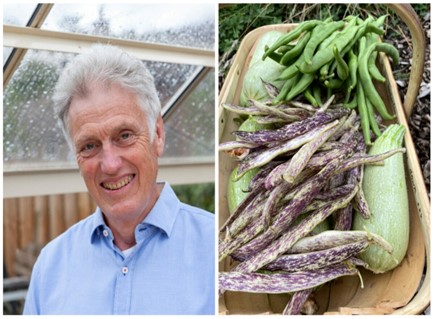
Adam Alexander travels the world looking for new seeds to add to his collection, an act he believes ties us to our ancestors. You’d expect someone once nicknamed the “Indiana Jones of seeds” to be a bit fanatical and dedicated to the job. But for Adam Alexander, author and horticulturist, seeds are more than just a job, hobby or passion. They’re a lifeline.

Seeds “are a visceral connection that I have with my most distant ancestors. It takes me back way beyond civilization,” says Alexander. “When you save your own seeds…you grow them for yourself and also share them; you are observing this cycle from seed to crop to saving endlessly going round and round. And that is something that connects me directly with those neolithic farmers.”

The Seed Detective: Photography courtesy of Jesse Alexander and Adam Alexander

The Seed Detective Book: Photography courtesy of Jesse Alexander and Adam Alexander

In his new book, The Seed Detective (which shares a name with his website), Alexander dives into the history behind vegetables while traveling the world hunting for their seeds. Over the years, he amassed quite a collection, now boasting seeds for more than 500 plant varieties, from which he grows 70 to 100 different crops each year in his home garden in eastern Wales.

The seed detective has collected seeds from around the world, building up a collection of little-known heritage varieties, as well as those plants on the edge of becoming lost. So far, that’s included garlic from Oman, peppers from Morocco and blue maize from a Hopi farmer in Arizona. He’s had plenty of successes germinating and rooting those seeds in the Welsh countryside—even making blue polenta out of the corn. Of course, not everything goes so smoothly. The landscape and climate of Wales is quite different from Arizona, after all.

Take the chilis he found in Singapore years ago. “I can’t get those damn things to flower,” he says. “They miss Singapore. I think I’ve got a message which is ‘Adam, that’s just one step too far.’ But I haven’t given up, I’ll put it that way.”

Alexander doesn’t give up easily. He’s continuing to try with those chili seeds, just like he experiments with all the seeds he collects. And even when the plants do successfully root, he knows they’ll not grow the same as in their native habitat. “It won’t taste quite the same, it won’t have grown in quite the same way. But what it is, for me, more than anything else, is a memory,” he says.

Many of those memories are of the places and people he’s visited while traveling to find the seeds. Often, people are happy to share their love of gardening and plants with him, eager to showcase their heirloom offerings. Other times, there’s more confusion or annoyance with his requests, like a funny exchange with an older woman selling goods at a market in Laos.

As Alexander writes, he tried to engage the woman in a conversation, asking about the bag of seeds hanging from her stall. “Are those pea seeds?” he asked through a translator. “Of course,” the woman replied. According to Alexander, she said it “in a very irritated tone as if speaking to a very small and stupid child.” He kept trying to find out more about the seeds, asking how tall they grow, how long the woman has been growing them, what part of the plant she eats. On and on he probed with basic questions, while the woman’s answers stayed as close to monosyllabic as possible. He said he could practically feel the daggers she seemed to shoot out of her eyes at him. Eventually, he was able to simply buy a bag of the seeds and take his chances with them when he got them home.

“The last thing she was expecting is some old geezer to start asking idiotic questions,” Alexander recalls. But those kinds of conversations, fumbling as they may be, can lead to great discoveries. “To me, my garden is an ark. There are things that are growing in it that are highly endangered. And if I didn’t grow them, I don’t know what would be happening to them.”

The Seed Detective: Photography courtesy of Jesse Alexander and Adam Alexander

The Seed Detective: Photography courtesy of Jesse Alexander and Adam Alexander

While each seed that Alexander grows might originally be suited to a different area of the world, he encourages people to try seed swapping, with friends and neighbors or as part of a larger club. He even shares seeds through his website, making his entire catalog available to peruse online. (He does ask for a donation to cover the cost of shipping.)

Not only does he believe that fresh produce is tastier, but he says the plants can become locally adapted. It’s part of what Alexander would like to see as a new green revolution, with communities prioritizing feeding themselves, putting the land and climate front and center. Rather than “paying multinationals huge amounts of money,” as Alexander says, for food and seeds, you can take steps toward moving your food systems into your own control.

By reinforcing the connection between what we grow and what we eat, we are reinforcing our values and priorities. As Alexander writes in the book: “Saving seeds from one’s own crops inspires us to think more deeply about the food choices we make.”

Link to original article:  This Seed Detective Travels the World Tracking Down Lost Crops – Modern Farmer

July’s Book Recommendation: The Seed Keeper

July’s Book Recommendation: The Seed Keeper

July’s Book Recommendation: The Seed Keeper

By Cassandra D’Antonio (SEMG 2012)

I typically order books for my Kindle. I bought The Seed Keeper in paperback because I knew I would want to lend it to my Master Gardener friends who are themselves seed keepers. I so loved this book. Because I decided my description would not do it justice, I am providing one I found on Amazon. Below are also a few verses from the poem—The Seeds Speak—which precedes the book’s narrative. Written from the seeds’ perspective, the poem is so beautifully descriptive, you will want to read it again and again.   

AMAZON’S DESCRIPTION. A haunting novel spanning several generations, The Seed Keeper follows a Dakhóta family’s struggle to preserve their way of life, and their sacrifices to protect what matters most. Rosalie Iron Wing has grown up in the woods with her father, Ray, a former science teacher who tells her stories of plants, of the stars, of the origins of the Dakhóta people. Until, one morning, Ray doesn’t return from checking his traps. Told she has no family, Rosalie is sent to live with a foster family in nearby Mankato―where the reserved, bookish teenager meets rebellious Gaby Makespeace, in a friendship that transcends the damaged legacies they’ve inherited… Weaving together the voices of four indelible women, The Seed Keeper is a beautifully told story of reawakening, of remembering our original relationship to the seeds and, through them, to our ancestors.

The Seeds Speak

We are hungry, but the sleep is upon us.
We are thirsty, but the Mother has instructed us not to wake up too early.
We are restless, chafing against this thin membrane, pushing back against the dark
that bids us to lie still, suspended in a near-death that is not dying.

****

The Mother gave us patience stronger than our hunger, stronger than our thirst.
We dwell in the realm of dreams and spirit.
When the sun draws near,
we awake and embrace the warmth, fed by the soil and nourished by the rain.
When the cold returns, we withdraw once more to rest and dream.

HOME GROWN HEROES!

HOME GROWN HEROES!

HOME GROWN HEROES!

by Kate Shadock – SEMG 2018

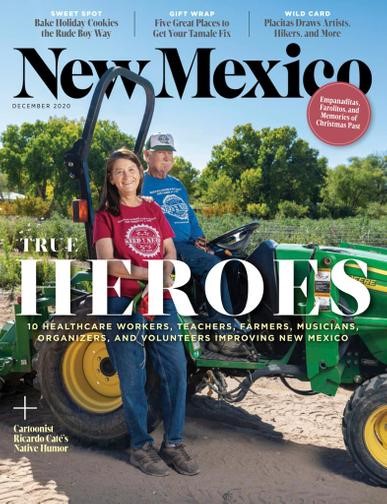
Many SEMG members were surprised and delighted to find our own Penny Davis, with her husband Sandy, on the cover of the December 2020 issue of the New Mexico Magazine.

We know Penny and Sandy as the founders of Seed2Need, the farm-to-food-bank program that attracts up to 500 volunteers each year from Master Gardeners, Scout troops, local businesses, church groups, members of the general public and students from Bosque School, Albuquerque Academy and Cibola High School.

Penny, a 2007 SEMG graduate, and Sandy started their operation in 2008, just as the economy collapsed and people lost jobs. They started growing vegetables in their neighbor’s empty horse corral with the commitment to donate the yield to Storehouse West in Rio Rancho. Penny admitted to being thrilled when a few years later, with more donated land and dedicated volunteers, the project produced 1,900 pounds of food for the food banks.

In 2010 the Sandoval Extension Master Gardeners agreed to sponsor Seed2Need. Since 2010 this project has donated more than 590,000 pounds of farm fresh fruits and to five local foodbanks and Roadrunner Food Bank.

In addition to planting, caring for, and harvesting the vegetable crops Seed2Need also coordinates volunteer teams for gleaning fruit from orchards all over the valley. A harvest of 10,000 pounds of apples from a single orchard is not uncommon. Seed2Need coordinates these large gleaning projects with Roadrunner Foodbank as they can consolidate and re-distribute to foodbanks all over the state

When asked what the best part of Seed2Need is, beyond providing tons of healthy food for people in Sandoval and Bernalillo county. Penny didn’t hesitate to respond, ”Getting to know so many nice people!” Penny and Sandy Davis are genuinely nice people as well.

Volunteer signup sheets and photos of the project can be found on Seed2Need Facebook page.  Volunteers are always welcome.

To find out more about volunteering for Seed2Need, as well as other programs, check out Sandoval Extension Master Gardener Projects.

From the first day I heard about Seed2Need, Margaret Mead’s famous quote has continued to repeat in my head.

“Never doubt that a small group of thoughtful committed individuals can change the world. In fact, it’s the only thing that ever has.”

Sources: December 2020 New Mexico Magazine article by Molly Boyle, photos by Gabriella Marks; Interview with Penny Davis

GROW YOUR LIBRARY – Recommended Plant Books

GROW YOUR LIBRARY – Recommended Plant Books

GROW YOUR LIBRARY – Recommended Plant Books

Recommendations from Marisa Y. Thompson Ph/D, Extension Horticulture Specialist

TITLE AUTHOR
Attracting Native Pollinators Xerces Society
The Bees In Your Backyard: A Guide to North America’s Bees Joseph S. Wilson & Olivia Messinger Carril
Best Plants for New Mexico Gardens and Landscapes Baker Morrow
Braiding Sweetgrass: Indigenous Wisdom, Scientific Knowledge and the Teachings of Plants Robin Wall Kimmerer
Flowering Plants of New Mexico Robert DeWitt Ivey
Garden Insects of North America Whitney Cranshaw & David Shetlar
Growing the Southwest Garden Judith Phillips
Hummingbird Plants of the Southwest Marcy Scott
Insects and Diseases of Woody Plants of Colorado Colorado State University Extension
National Audobon Society Field Guide to North American Trees National Audobon Society
New Mexico Gardener’s Guide Judith Phillips
Pests of the West Whitney Cranshaw
Planting and Training: What. When, and How to Prune DK Publishing
The Life of a Leaf Steven Vogel
Weeds of the West Western Society of Weed Science
What a Plant Knows Daniel Chamovitz
What Tree Is That? Arbor Day Foundation
Yard Full of Sun Scott Calhoun

Book Review: A-Z Encyclopedia of Garden Plants

Book Review: A-Z Encyclopedia of Garden Plants

Book Review: A-Z Encyclopedia of Garden Plants

Book Review: The American Horticultural Society A-Z Encyclopedia of Garden Plants edited by Christopher Brickell & Judith Zuk

 Article & Photos by: Mike Stoy, SCMG

 Just after we moved into our third house in Seattle in 1996, while we were designing the garden, I came across this wonderful book edited by Christopher Brickell. This book has been my plant bible ever since. It is a massive book at 9 1/2” x 11 1/2″ and 2 ½ inches thick with nearly 1,100 pages. It covers more than 15,000 plants and is lavishly illustrated with more than 6,000 photographs and illustrations.

Plants 01

The book opens with a lot of useful information on botany and cultivation of plants along with a visual glossary and a text glossary in the rear. Next is a brief discussion of different types of plants grouped into categories like trees, ferns, annuals, etc.. This section describes the group then discusses how to use and grow them in the garden. The bulk of the book is the plant descriptions in the encyclopedia. The plants arranged alphabetically by their botanical names but there is an extensive index of common names in the back so you can find the plant even if you do not know the Latin name. Other synonyms and common names are also listed.

Plants 02 web

I have used this book extensively when I see or hear about a plant type I like and want to find out more information on the plant and other similar plants. For example if you saw a plant you liked and a friend told you it was a heather you would start in the index in back and find that there are two different genera of plants commonly called heather. The Latin name for one is Calluna which are the true heathers. After looking these up in the plant encyclopedia you could determine that the plant you saw was not a true heather so you go to the other genus which is Erica or the heaths. Under this listing you will find a good discussion of the genus covering hardiness, cultivation, propagation and pests and diseases. Next there are four pages of listings of 136 individual species and cultivars along with 44 photographs. For each of these the growth habit, leaf and flower color and anatomy, plant height and spread, geographical origin, and hardiness is listed. This will allow you to find several plants that would work for you in your garden.

My copy of the book is the 1997 edition which sold over 190,000 copies but there was a second edition published in 2004. Neither of them are still in print but they are both readily available from used book sellers online. If you are looking for a truly comprehensive garden plant book this is a great one to own.

Book Review – Cacti & Succulents for Cold Climates

Book Review – Cacti & Succulents for Cold Climates

Book Review – Cacti & Succulents for Cold Climates

Article by: Mike Stoy, SCMG

I have always loved cactus. When I got out of grad school at UNM 35 years ago and moved to Seattle I took the half dozen cactus I had in my dorm room with me. Within a couple of years they all died from mold due to the humidity despite having a grow light on them. Although I never tried growing cactus again in Seattle, I still collected a lot of books on cactus over the intervening years. When we moved back to New Mexico a couple years ago I discovered this wonderful book by Leo J. Chance that is without a doubt the best book on growing cactus and succulents in northern New Mexico I have seen. Some books, like The Cacti of the Untied States and Canada by Benson at 1,044 pages, are more thorough but they are also very dense and hard to wade through to get useful information. This book is very accessible and packed full of useful information for anyone interested in cacti and succulents.

Cacti 01

Chance begins by covering what factors determine hardiness and how to increase your success rate with cactus in cold climates. Not all cold climates or locations are the same and knowing what you can control is very useful. He covers microclimates, watering, drainage, soil types, soil amendments as well as how and where to plant. There is also an excellent chapter on propagating plants from seeds and cuttings.

The meat of the book is the chapters on the individual species of cactus and succulents. In these chapters Chance profiles 274 cactus and succulents that are proven to survive in USDA Zone 5 (-20⁰F or -28⁰C) gardens. First, he covers some general information about each genus followed by detailed descriptions of the individual species and hybrids. Each plant profile includes a general description along with information on the native range, growth rate and mature size, flower color and bloom time and specific recommendations on growing the species in cold climates. He also includes beautiful color photos of nearly every plant he discusses.

Cacti 03

At the end of the book there is a chapter on companion plants to use in your garden alongside your cactus and succulents. He also includes a nice list of sources for purchasing plants and a useful bibliography if you want to learn more. If you have even a passing interest in growing cactus and succulents in Sandoval County and can only buy one book on the topic I highly recommend this one as your best source of information.