Placitas Wildflower Walk – Field Trip

Placitas Wildflower Walk – Field Trip

Placitas Wildflower Walk – Field Trip

by Brandt Magic

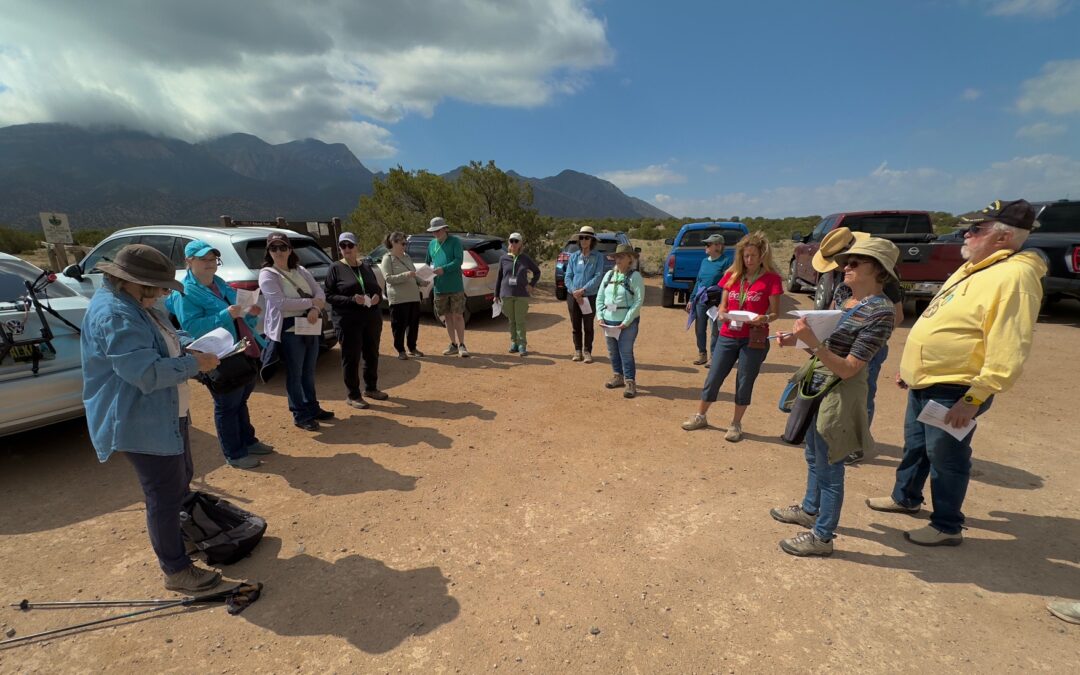
Sharon Walsh, Master Gardener and Botanist, recently led a Wildflower Walk in the Placitas Open Space. 16 Master Gardener interns and veterans were there. This is the second year for this successful event.

Participants observed and learned to identify native plants including One-seed Juniper, Tree Cholla, Thicksepal Crypthantha, Fendler’s Hedghog Cactus, Mormon Tea, Fendler’s Bladderpod, Indian Parsley and many others. Many experimented with plant identification phone apps including iNaturalist. Others compared flowering plants observed to a species checklist for the area provided by Sharon.

The weather held with thunderstorms passing after the walk ended.

Placitas Wildflower Walk

Placitas Wildflower Walk

SEMGS! It's time to pay dues!

Members of the Class of 2025 do not need to pay 2026 dues. These dues were included in your Intern Fee.

Subscribe to Our Newsletter:
* indicates required

2026 SEMG Applicants Pay Here

Museum of Southwestern Biology Field Trip

Museum of Southwestern Biology Field Trip

Museum of Southwestern Biology Field Trip

by Brandt Magic

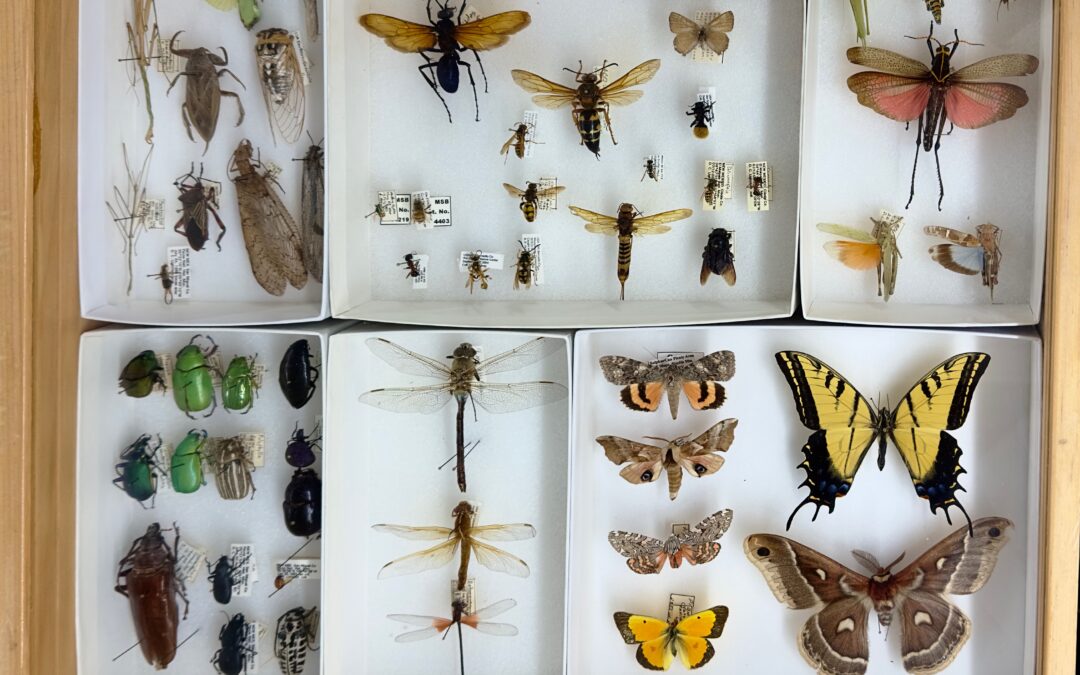
For the second year in a row, the Museum of Southwestern Biology at UNM (http://msb.unm.edu/ ) welcomed Sandoval Extension Master Gardener interns to view their world-class insect collection. The museum’s Arthropod collection is the most extensive in the southwest and includes a large number of the over 20,000 describe species in New Mexico.

Dr. David Lightfoot, collection manager, spoke about the science of entomology (the study of insects). He talked about how he has worked at the museum studying insects and for Fish and Game doing management programs. He also shared his own personal experience as a life-long gardener, and his philosophy of minimizing human impact on insect populations.

Special guest speaker for the day was Kaitlin Haase of the New Mexico Xerces Society for Invertebrate Conservation (https://www.xerces.org/). She addressed how gardeners can help pollinators through plant selection and best practices in their gardens. She shared Xerces Society plant lists and other conservation publications. Kaitlin’s talk followed her Canvas based lecture on pollinators, a new addition to the NMSU Master Gardener program.


SEMGS! It's time to pay dues!

Members of the Class of 2025 do not need to pay 2026 dues. These dues were included in your Intern Fee.

Subscribe to Our Newsletter:
* indicates required

2026 SEMG Applicants Pay Here

ALERT! Tomato Growers: Desert Broomrape kills your tomato plants

ALERT! Tomato Growers: Desert Broomrape kills your tomato plants

ALERT! Tomato Growers: Desert Broomrape kills your tomato plants

Seed2Need[1] has encountered a parasitic weed killing the garden’s tomato plants.  The weed was identified as a species of Broomrape – most likely Desert Broomrape – with the help of the Agricultural Extension Service at NMSU. The only crop vegetable this parasitic plant is known to kill is tomato.

broomrapeBroomrape (Orobanche spp.) is a purple-flowered plant categorized as a noxious weed by the USDA. Broomrape attaches itself to the roots of tomato plants, eventually killing the host plant by depriving it of nutrients.

A single broomrape seedling quickly grows beneath the tomato plant, producing up to 500,000 microscopic wind-dispersed seeds that can survive in soil 35 years.

Every tomato plant in our large Seed2Need garden was affected in July. We believe that broomrape arrived in the garden in 2022, subsequently producing seeds that were tilled into the soil in the early spring of 2023. Measures are being taken to kill every broomrape and tomato plant in the affected patch.

We are sharing this information because broomrape may be growing in other tomato patches. If you find broomrape in your tomato patch, please report it to the Master Gardeners helpline at emailhelpline@sandovalmastergardeners.org

[1] Seed to Need is a nonprofit collaborative effort between the Sandoval Extension Master Gardeners, property owners in the village of Corrales and other volunteer groups, whose mission is to reduce hunger in the community by growing fresh fruits and vegetables and donating it to food pantries in Bernalillo and Sandoval Counties.

In New Mexico, Money Grows on Trees

In New Mexico, Money Grows on Trees

In New Mexico, Money Grows on Trees

Excerpted from EATER NEWS – 6 December  – Author – Karen Fischer

Outside of Gallup NM, along Highway 602, is what is locally known as the Checkerboard. Parcels of land in the Checkerboard are, as the name might imply, mixed — there is tribal-owned, state-owned, or privately owned land near each other. “Checkerboarding” dates to the mid 1800s, when Navajos were forced onto reservation lands and assigned individual plots for subsistence farming, while other parcels were sold to railroad companies and private citizens. Pragmatically, the land designation is a challenge — getting the proper permits for construction or utility installation quickly becomes complicated. One perk of the land in this area, one that makes it so very valuable to locals who visit it in the summer, is the wealth of bushy piñon trees.

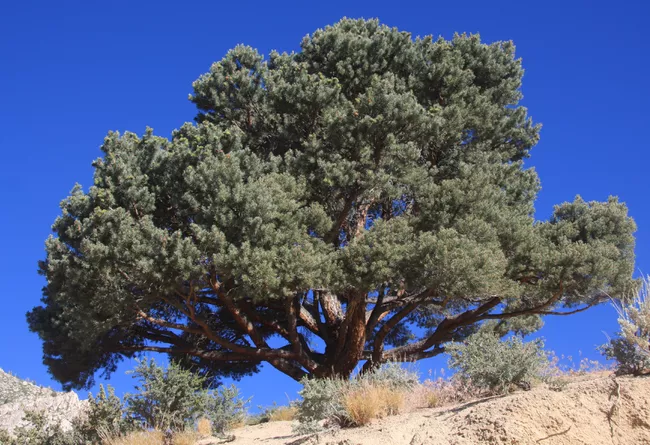
Piñon pine trees are indigenous to the high desert of the Southwest and produce nuts that are simply called piñon. The small, dark brown nuts ripen and fall from the pines each summer and autumn across the intersection of the Four Corners states: Arizona, New Mexico, Colorado, and Utah. To eat them, you must crack the shell of the piñon between your canine teeth, peel open the shell, and pull out the pale meat within the nut. The process is like munching sunflower seeds or pistachios, except that the shell can’t be mechanically loosened ahead of time for easy snacking — the hard exterior must always be cracked and shucked by hand. Though piñon closely resemble pine nuts to the untrained eye and palate, a local around Gallup will quickly correct you. “Pine nuts are big and bland,” “Piñon are small and sweet.”   Photo:  Santa Fe Botanical Gardens

The area around Gallup — which occupies the unceded traditional homelands of the Zuni, Pueblo, and Diné Bikéyah and other Indigenous tribes — isn’t the only place where piñon can be harvested. The trees also grow in western California, veer east across New Mexico to northern Texas, range north across southwest Colorado and even pop up in Wyoming. In New Mexico, the culture of foraging for piñon is particularly deep-seated because of the sheer abundance. For centuries, Mescalero Apaches, Navajos, and Puebloan communities, among others across the Southwest, relied on piñon as a staple source of fat and calories. They also steeped the pine needles for tea and chewed the inner bark to ward off starvation in lean times. The wood of the piñon tree is still burned today as a form of incense and is a favorite souvenir from a visit to New Mexico.

During boom years of piñon drop, late-summer Gallup transforms into a massive center for piñon commerce. Gigantic signs outside of gas stations, restaurants, and trading posts advertise that they are buying piñon. Vans toting brokers from outside of the region park along Highway 602 and set up tables and chairs with their own handmade signs: “BUYING PINON.”

Per local lore, especially large yields of piñon only occur once every four years. Precise movements are required to pick the very best nuts: The piñon must be rolled gently between three fingertips. If the nut feels heavy through the rolling motion, you have a good piñon. If, by touch, the nut feels light, it is a dud.

The only reliable way to pick piñon requires spending long hours beneath trees, with a small stool, and feeling each individual one by hand. The value of piñon also stems from the timeliness of the drop: The nuts are only good for about a month once they hit the ground.

For many years, piñon was a central cash crop for New Mexico: “Piñon is like gold,” you’ll hear locals say. Thus, those little nuts are worth a whole lot of cash if you choose to pick and sell them to the highest bidder. In the summer of 2020, piñon pickers were regularly selling nuts to local traders in Gallup for $15 a pound. If a picker finds a particularly rich tree, a pound can be collected in about an hour. Therefore, the cash earned from picking can be vital for families in the region. For these families, harvesting and trading piñon is often about more than tradition: it’s an important financial boost.

The farther one gets from piñon epicenters like Gallup, the higher the price gets for the raw product from a picker. Often, getting out of the hyper-localized piñon epicenter into drier, less piñon-dense regions immediately gives sellers the upper hand to earn more money on the transaction.

With the piñons, the bark beetles have wreaked havoc on the trees. “We’re handling 10 percent of what we used to handle in the 1960s. That’s all there is.” In the 1960s, Ellis Tanner recalls buying as much as a million pounds of piñon and distributing it from coast to coast. In 2020, even with the boom harvest of piñon, Tanner only purchased about 80,000 pounds of nuts.

Tanner is the first to admit that most of his piñon sales come from national wholesale buyers. While he sells some product through his trading post, all piñon goes through the same initial process. In the high season, Tanner buys piñon by the pound from local pickers. From there, he washes the nuts and cures the piñon to avoid rot (though his specific curing technique is a well-guarded secret). Once the nuts are cleaned and cured, he stores them in a ventilated storage space to await the next wholesale buyer. That buyer, once they purchase however many pounds of nuts from Tanner, seasons, shells, or otherwise alters the piñon to their own liking. From there, the piñon either finds its way to the end-eater or is traded through the hands of more middlemen as it makes its way to new, far-flung locales.

Even though retail prices for piñon are high and pickers can earn a decent sum per pound, Tanner clarifies that trading piñon doesn’t always equate to hefty returns on his investment, especially for the labor of drying, curing, and cleaning nuts. “If we make a 20-25 percent margin per pound, we’re doing a grand-slam home run. Most of the time we have a 10 percent margin.”

If Tanner sells the piñon he processes at his retail store directly, he can easily double what he bought the nuts for, but the vast proportion of sales do not come from retail in his shop, even with a community that adores them — he only retails about 5 percent of what he buys. He still dreams of the boom years of piñon trading. “I wish I could buy in the old quantities. The biggest reason is all of the monetary revenue it would bring to the Navajo people.”

The road of trading piñon might not be as flush with profit as it used to be, but Tanner is hopeful about the economic opportunities for local pickers in selling their own piñon at retail and taking the middleman, like him, out of the equation. “I’m just here if you need me.”

Because picking piñon off the ground requires so much time and concentration, modern harvesters have employed several contested tactics to expedite the process. One involves picking entire sappy pinecones off the tree to whack out the nuts that haven’t naturally released just yet. A second involves placing blankets on the ground, grasping the body of a piñon tree, and shaking the whole tree to loosen nuts from the cones without touching them. “Traditionally for us Navajos, we’re told not to shake the trees because that attracts bears — it’s a bad omen,” says Colina Yazzie, the owner of Yazzie’s Indian Art in downtown Gallup.

For Yazzie, the best way to prepare freshly foraged piñon is to roast them very, very meticulously. “You wash the piñon, and when they’re still wet, you put them in a pan and turn the stove on medium heat. You stir until you can smell them roasting. One will pop — that’s when you know they’re done.”

The lack of piñon, even after a boom year, does make one question how the confluence of bark beetles and heat waves will impact the density of piñon in the region for the years to come. It also leaves the financial fate of many locals, who rely on the seasonal income stream of dense piñon drops, hanging in the balance.

But the boom and bust is all part of the lesson of piñon, says Adeky. “You learn from an early age that there are seasons when certain things happen,” she says. “It’s a type of teaching. In the summertime, you must prepare yourself to have enough to eat for the winter. At the core, I think people know that. I hope people pick not just for selling, but for the understanding that there is a season of plenty.”

Karen Fischer is a writer living in New Mexico. 

For full article –
https://www.eater.com/22812750/picking-selling-business-pinon-nuts-harvest-new-mexico-navajo-nation